White Quartz Countertops: A Comprehensive Technical & Practical Guide
The Comprehensive Guide to White Quartz Countertops
White quartz countertops represent a major category of engineered stone surfaces used in modern architecture and interior design. Unlike natural stones like marble or granite, these surfaces are manufactured by combining crushed natural quartz aggregates with polymer resins, binding agents, and pigments. This industrial process creates a material that is prized for its high density, lack of porosity, and aesthetic consistency, making it a standard choice for surfaces that require both visual clarity and high-level functionality.
Understanding the technical specifications and maintenance requirements of these surfaces is essential for anyone involved in a renovation or new construction project. This guide provides a neutral, detailed overview of how these materials are produced, the different aesthetic and functional categories available, and the practical logistical considerations for implementation. Readers will learn to evaluate material quality, understand the implications of different finishes, and manage the long-term integrity of the installation.
Overview of White Quartz Countertops
The core concept behind white quartz countertops is the creation of a nearly indestructible surface through the vibration-compression-vacuum process. Natural quartz is one of the hardest minerals on the Mohs scale, and when it is refined and bound with high-performance resins, the resulting slab is harder and more flexible than many natural stones. In the “white” category, pigments are carefully controlled to achieve various levels of brightness, ranging from stark, clinical whites to warmer, creamier tones.
People commonly approach white quartz when they desire the bright, clean aesthetic of white marble but want to avoid the chemical sensitivity and porosity of metamorphic rock. Typical goals include achieving a uniform look across large surfaces and ensuring a hygienic environment, as the non-porous nature of the resin prevents the growth of mold or bacteria. The expected outcome is a surface that does not require the periodic sealing necessary for natural stone and remains resistant to staining from common household liquids.
Key Categories and Aesthetic Variations
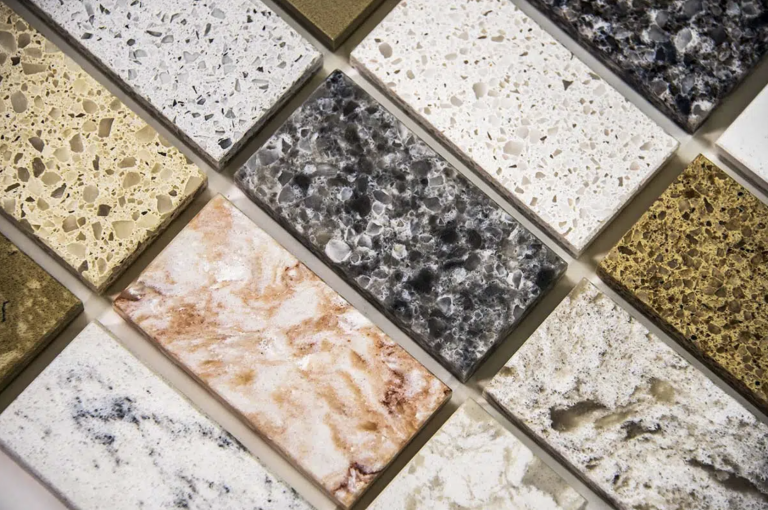
White quartz is not a monolithic category; it is divided into several sub-types based on the size of the quartz “grit” and the complexity of the added pigments.
Material Category Table
| Category / Type | Description | Common Use Case | Effort / Cost Level |
| Solid / Pure White | Ultra-fine particles resulting in a seamless, flat white appearance. | Minimalist kitchens; modern laboratories. | Moderate |
| Icy / Fine Grain | Small, sand-like quartz particles that provide subtle depth. | High-traffic family kitchens; rental properties. | Low to Moderate |
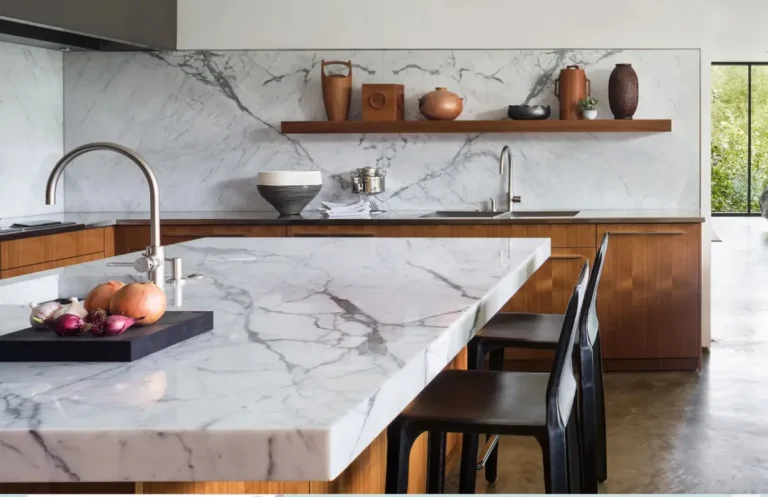
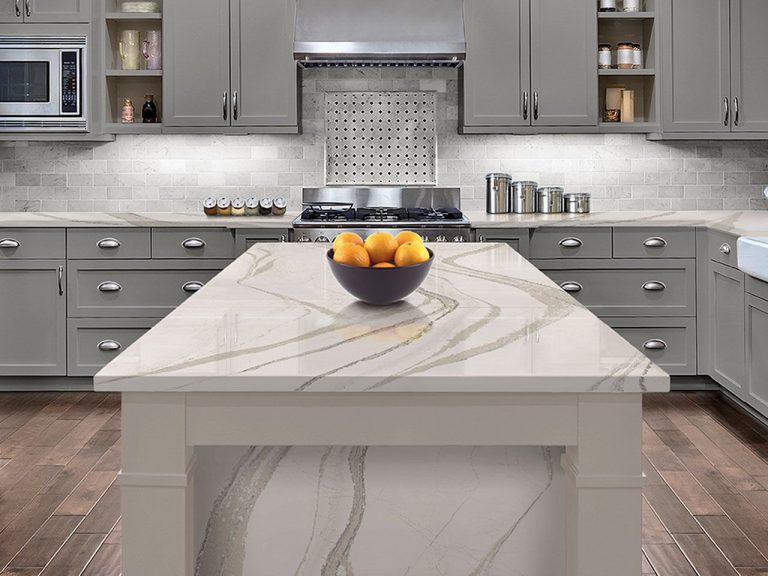
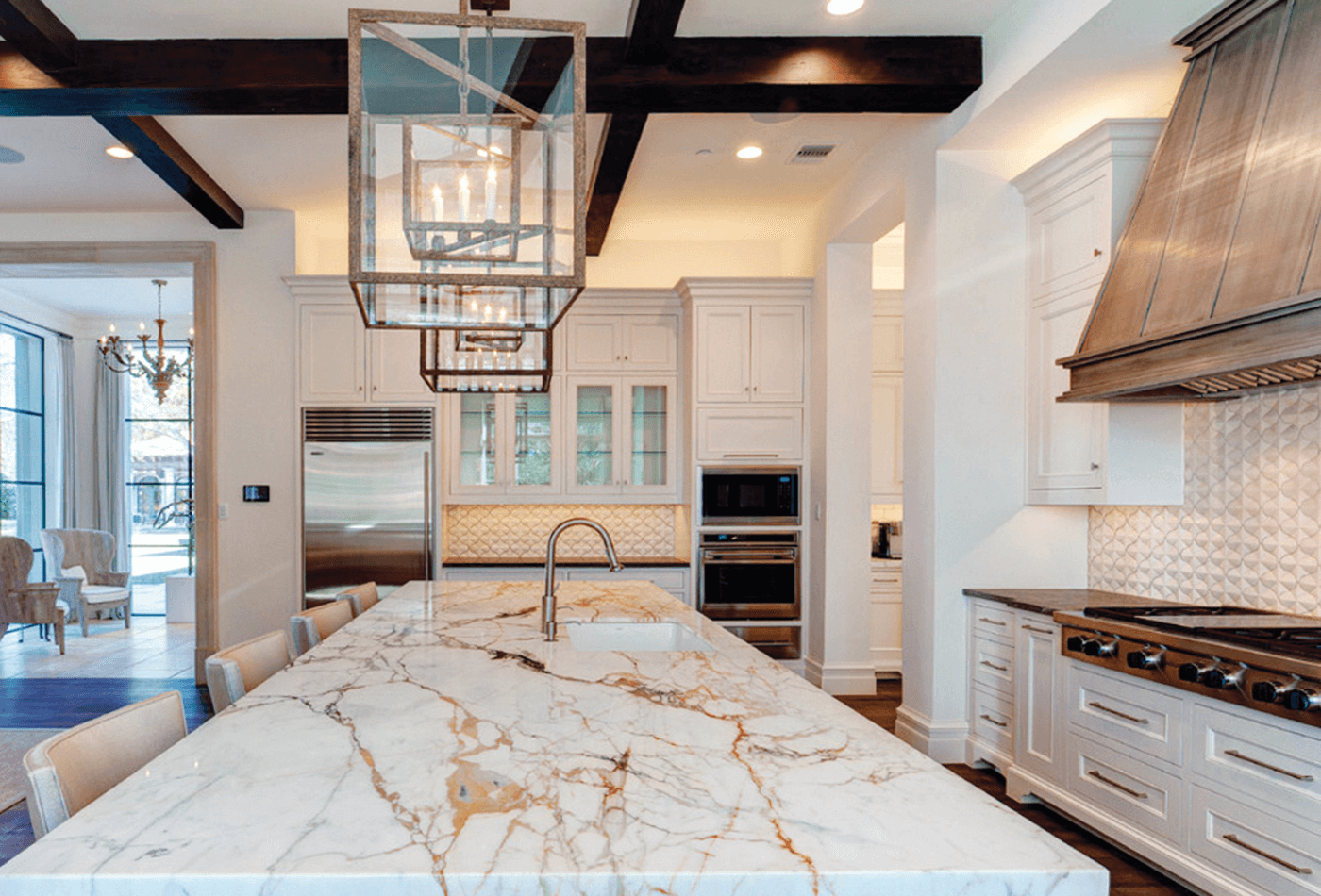
| Marble-Veined | Grey or gold pigments injected to mimic Calacatta or Carrara marble. | Luxury islands; master bathroom vanities. | High |
| Sparkle / Mirrored | Includes small fragments of reflective glass or mirror. | Commercial retail counters; vibrant modern homes. | Low |
| Concrete-Look | Matte finishes with grey-white mottled tones and “industrial” texture. | Loft-style apartments; outdoor-adjacent areas. | Moderate |
Choosing between these categories involves balancing the desired visual style with the environment’s lighting. Solid whites show debris more easily but offer a sleek look, while grained or veined patterns are more effective at concealing small particles or water spots.
Practical Scenarios or Thematic Applications

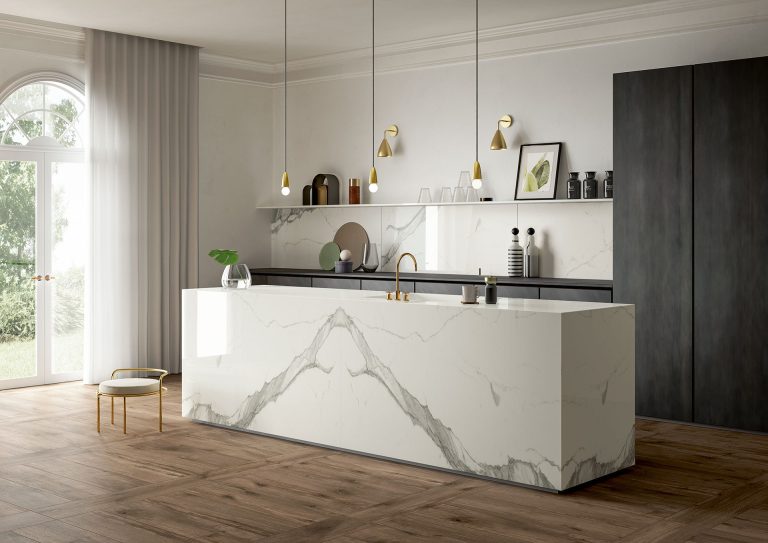
Scenario 1: The Modern Minimalist Kitchen
In this scenario, the primary objective is visual continuity and a “clutter-free” appearance. The focus is on sharp lines and seamless transitions.
-
Components: 2cm thick pure white slabs, mitered edges to create a “thick block” look, and matching quartz backsplashes.
-
Steps: Precise digital templating, waterfall edge fabrication for islands, and undermount sink integration.
-
Elements: Hidden outlets, integrated drainboards, and handle-less cabinetry.
-
Relevance: This application demonstrates the material’s ability to provide a perfectly uniform color that natural stone cannot achieve.
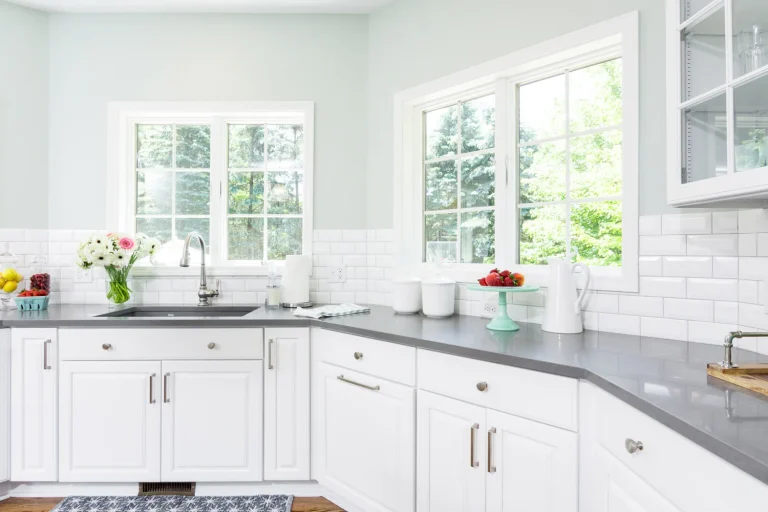
Scenario 2: The High-Volume Family Environment
Here, the priority shifts toward resilience and hiding the wear of daily activities.
-
Components: 3cm thick fine-grain quartz, eased or bullnose edges to prevent chipping, and standard 4-inch backsplashes.
-
Steps: Cabinet reinforcement for slab weight, seam placement in low-visibility areas, and initial cleaning.
-
Elements: Large prep areas, breakfast bars, and heavy-duty appliances.
-
Relevance: This scenario highlights quartz’s stain resistance against common acidic liquids like juice or vinegar.
Scenario 3: Professional Healthcare or Laboratory Setting
Non-porosity and sanitation are the driving factors in clinical environments.
-
Components: Anti-microbial resin formulations, coved (curved) backsplashes for easy cleaning, and matte finishes to reduce glare.
-
Steps: Specialized epoxy joining of seams, chemical-resistance testing, and secure mounting.
-
Elements: Integrated basins, chemical-resistant caulking, and task lighting.
-
Relevance: This emphasizes the hygienic benefits of engineered stone, where zero porosity is a safety requirement.
Comparison: Scenario 1 is driven by aesthetics; Scenario 2 by durability; Scenario 3 by hygiene. Readers should assess which priority dominates their specific project to determine the best slab thickness and finish.
Planning, Cost, and Resource Considerations
Planning is the most critical phase for white quartz countertops because the material is heavy, rigid, and cannot be easily modified once it leaves the fabrication shop. Proper budgeting must include not just the material, but the labor-intensive fabrication and installation processes.
Sample Budget Table
| Category | Estimated Amount / Effort | Explanation | Optimization Tips |
| Slab Material | $50 – $120 per sq. ft. | Premium brands and complex veining increase cost. | Use “remnants” for small vanities. |
| Fabrication | $20 – $50 per linear ft. | Labor for cutting, edge-work, and sink cutouts. | Select standard edge profiles to save. |
| Installation | $300 – $800 total | Delivery and professional placement/sealing. | Ensure clear site access to reduce labor time. |
| Support Prep | $100 – $300 | Plywood sub-tops or steel brackets for overhangs. | Design overhangs within 10-12 inches. |
Note: Figures are illustrative examples and will vary significantly based on regional labor rates and material availability.
Strategies, Tools, and Support Options
Successful installation relies on a combination of digital precision and physical support strategies.
-
Digital Templating: Using laser scanners to create a CAD file of the installation area.
-
Advantages: Accounts for walls that are not square; ensures a perfect fit.
-
Disadvantages: Requires professional equipment; higher upfront cost.
-
-
CNC Waterjet Cutting: Using high-pressure water and abrasives to cut the slabs.
-
Advantages: Extremely precise; prevents the heat-related cracking seen with standard saws.
-
Disadvantages: Shop-based only; cannot be adjusted on-site.
-
-
Seam Setters: Suction-based tools that pull slabs together while the epoxy cures.
-
Advantages: Creates nearly invisible seams; ensures level transitions.
-
Disadvantages: Adds time to the installation process.
-
-
Steel Bracketing: Reinforcing large overhangs (like breakfast bars) with hidden steel plates.
-
Advantages: Provides structural safety without visible “legs” or corbels.
-
Disadvantages: Must be planned and installed before the countertop is placed.
-
Safety, Risks, and Common Challenges

While the final product is safe, quartz has specific vulnerabilities that must be mitigated.
-
Thermal Shock: The resins in quartz can melt or discolor at temperatures around 300°F. Placing a hot pot directly on the surface can cause permanent “burn” marks or cracking. Prevention: Always use trivets or hot pads.
-
Chemical Exposure: High-pH cleaners (like bleach or drain cleaner) can break down the bond between the quartz and resin, leading to dullness. Prevention: Use pH-neutral soap and water only.
-
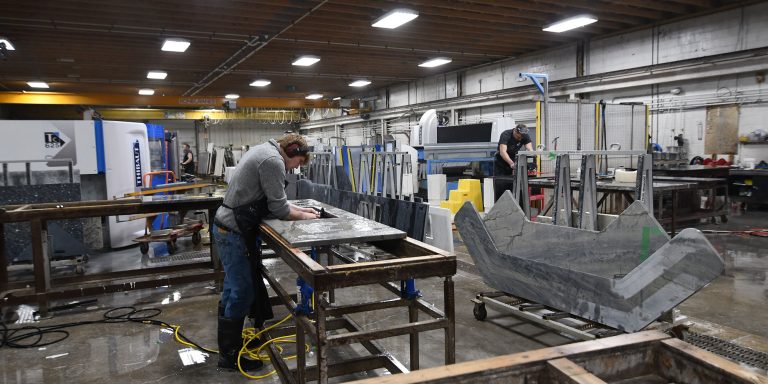
Silica Dust Risk: During fabrication, cutting quartz releases crystalline silica dust, which is hazardous to breathe. Prevention: Professional fabricators must use wet-cutting methods and high-grade respiratory protection.
-
UV Discoloration: Long-term exposure to direct sunlight can cause the white resin to yellow over time. Prevention: Avoid using white quartz in outdoor kitchens or areas with constant direct UV exposure.
Maintenance and Best Practices
Long-term management of white quartz is simpler than natural stone because it never requires sealing, but it does require disciplined cleaning.
-
Immediate Cleanup: While stain-resistant, highly pigmented liquids (like turmeric, red wine, or ink) should be wiped up immediately to prevent “surface staining.”
-
Non-Abrasive Tools: Use soft cloths or sponges. Avoid steel wool or scouring pads, which can create micro-scratches that trap dirt.
-
Avoid Pressure: Do not stand or sit on the countertops. The area around sink cutouts is particularly vulnerable to snapping under heavy weight.
-
Regular Review: Check the silicone caulking at the backsplash and sink every 12-24 months. If the caulk peels, moisture can get behind the cabinets.
Documentation and FAQ
Proper documentation ensures that if a section is damaged, you have the data needed for a match.
Tips for Organizing Information:
-
Keep the “Batch Number” and “Manufacturer Name” on file.
-
Store a digital copy of the final CAD template.
Illustrative Examples:
-
Warranty Management: A homeowner saves the specific care guide from the manufacturer, which is required to process a claim if the resin fails prematurely.
-
Batch Matching: A commercial developer records that “Slab Batch #902” was used in the lobby so that future extensions match the specific white hue exactly.
FAQ
Q: Do white quartz countertops stain?
A: They are stain-resistant, but not stain-proof. Substances like permanent marker or concentrated dyes can leave marks if not cleaned quickly.
Q: Can I cut food directly on the surface?
A: No. Quartz is harder than steel; while it might not scratch easily, it will dull your knives instantly. Always use a cutting board.
Q: Why is my white quartz turning yellow?
A: This is usually due to UV exposure or the use of harsh chemical cleaners that have reacted with the resin binders.
Closing Summary
White quartz countertops provide an ideal balance of aesthetic clarity and industrial-grade durability. By combining the hardness of natural quartz with the flexibility of modern resins, these surfaces offer a non-porous, low-maintenance solution for high-traffic environments. Success with this material requires careful planning for heat protection, professional installation to manage weight and seams, and a commitment to pH-neutral cleaning to preserve the brightness of the surface for years to come.