Kitchen Butcher Block Guide: Materials, Construction, and Care
The Comprehensive Guide to Kitchen Butcher Block
A butcher block is a functional surface constructed from individual wooden strips or blocks bonded together into a thick, sturdy slab. Originally developed for the heavy-duty demands of commercial meat processing, these surfaces have transitioned into residential architecture as a primary or secondary countertop material. Unlike solid wood planks, which may warp or cup over time, the specialized construction of a butcher block distributes structural tension across multiple grain orientations, resulting in a surface that is both durable and resilient under mechanical stress.
Understanding the technical attributes and maintenance requirements of this material is essential for successful kitchen design. This guide provides a neutral, detailed overview of the various wood species used, the mechanical differences between grain orientations, and the practicalities of long-term surface management. Readers will learn how to evaluate material hardness, plan for budgetary needs, and implement a disciplined maintenance routine to protect the organic fibers from moisture and bacterial growth.

Understanding Kitchen Butcher Block
The core concept of a kitchen butcher block involves the assembly of hardwood segments—such as maple, walnut, or oak—using high-strength, food-safe adhesives. The primary engineering goal is to utilize the natural shock-absorbing qualities of wood to create a surface that is gentle on cutlery while remaining structurally rigid. Unlike stone or ceramic, wood is a “living” material that expands and contracts in response to changes in ambient humidity, requiring specific installation techniques that allow for movement.
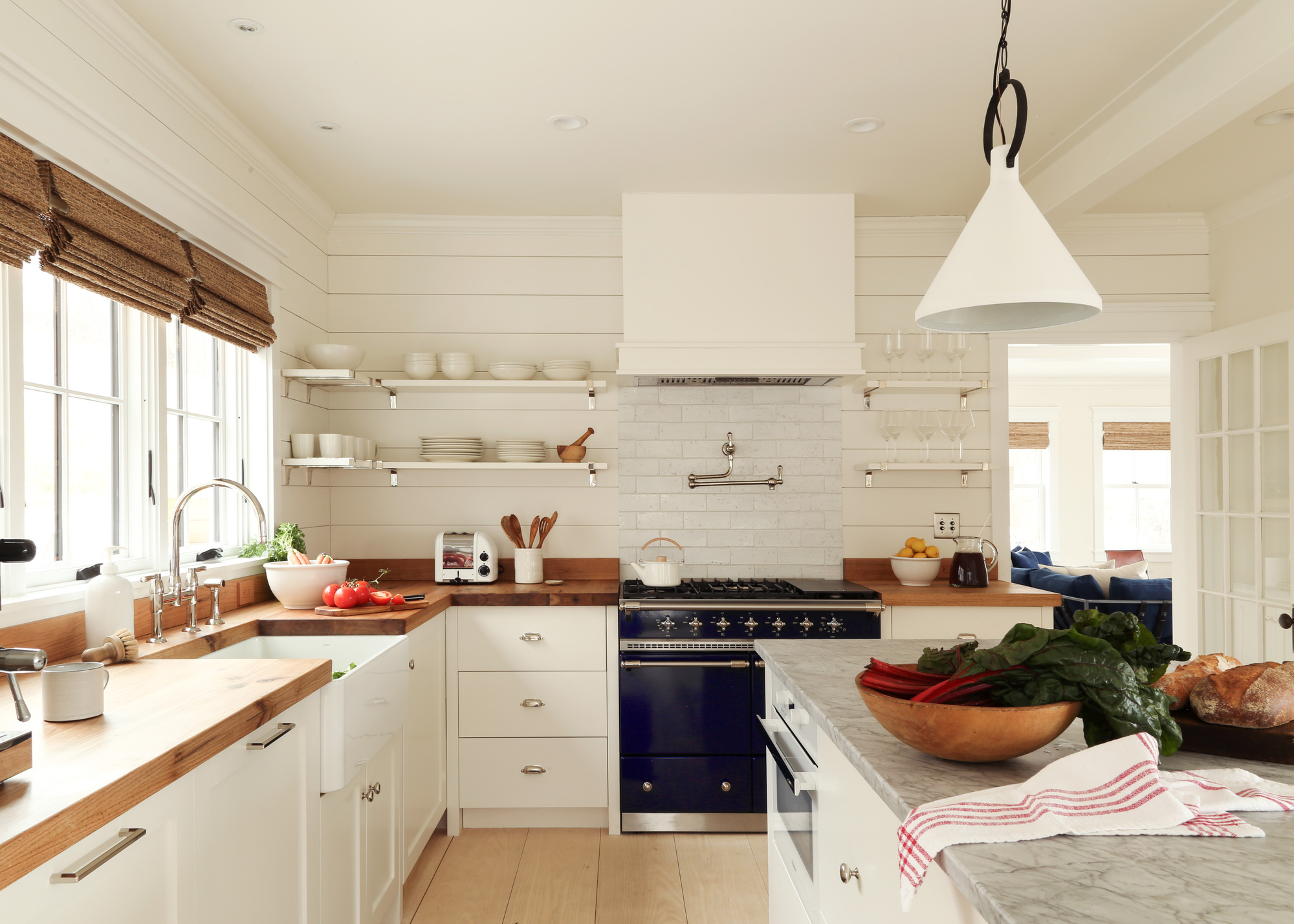
People commonly approach this material when seeking a “warm” aesthetic or a dedicated area for direct food preparation. Typical goals include creating a central kitchen island that functions as a large-scale cutting board or adding a secondary prep zone that contrasts with harder peripheral surfaces like granite. The expected outcome is a highly functional, renewable surface that can be sanded and refinished if damaged, provided the user adheres to strict moisture-control and oiling protocols.
Key Categories and Grain Orientations
The durability and appearance of a butcher block are primarily determined by the “grain orientation,” which refers to which part of the wood fiber faces upward.
Material Category Table
| Category / Type | Description | Common Use Case | Effort / Cost Level |
| End Grain | Vertically oriented blocks; the “cut ends” of the wood face up. | Professional chopping blocks; heavy-duty prep. | High |
| Edge Grain | Long, narrow strips of wood laid on their sides. | Standard kitchen countertops; dining islands. | Moderate |
| Face Grain | Wide planks laid flat; showcases the natural wood swirl. | Breakfast bars; decorative surfaces. | Low to Moderate |
| Maple (Hard) | Dense, light-colored wood with high Janka hardness. | General-purpose residential kitchens. | Moderate |
| Walnut | Dark, rich hardwood; naturally resistant to decay. | Luxury focal points; furniture-style islands. | High |
Choosing between these categories depends on the intended use. End grain is the most durable and “self-healing” because the knife blade slides between the wood fibers rather than severing them, but it is also the most expensive due to the complex assembly process. Edge grain is the standard for full-length kitchen butcher block counters because it offers a balance of stability and cost-efficiency.
Practical Scenarios or Thematic Applications

Scenario 1: The Dedicated Prep Island
In this application, the butcher block serves as the primary zone for dicing, chopping, and food assembly.
-
Components: 3-inch thick end-grain maple, food-grade mineral oil finish, and unsealed surface.
-
Steps: Secure the slab with slotted fasteners to allow for expansion, apply multiple coats of oil, and ensure no sink is integrated into this specific zone.
-
Relevance: This scenario utilizes the wood’s natural antibacterial properties and knife-friendly surface in a high-activity environment.
Scenario 2: The Transitional Breakfast Bar
Used as an extension of a stone countertop to provide a warm dining area.
-
Components: Edge-grain walnut, polyurethane or hard-wax oil finish, and decorative mitered edges.
-
Steps: Match the height to existing counters, provide a 10–12 inch overhang for seating, and use steel brackets for support.
-
Relevance: Because this area is used for dining rather than raw prep, a permanent film-forming finish can be used to prevent water rings.
Scenario 3: The Hybrid Countertop System
Integrating a small butcher block section into a run of stone or quartz countertops.
-
Components: Recessed edge-grain block, flush-mount installation, and silicone expansion joints.
-
Steps: Cut a precise opening in the stone, install the block on a slightly raised frame, and seal the transition point.
-
Relevance: This demonstrates how wood can coexist with harder materials, providing a dedicated “cutting station” without committing to full-wood counters.
Comparison: Scenario 1 focuses on professional-grade utility; Scenario 2 prioritizes aesthetics and seating; Scenario 3 emphasizes material contrast. Readers should choose Scenario 1 for heavy cooking and Scenario 2 for entertaining.
Planning, Cost, and Resource Considerations

Preparation is critical because wood weight and environmental factors (humidity) affect the installation’s lifespan.
Sample Budget Table
| Category | Estimated Amount | Explanation | Optimization Tips |
| Material (Slabs) | $30 – $150 per sq. ft. | Hardwoods like Walnut cost more than Maple or Birch. | Select “standard” species like Maple for value. |
| Fabrication | $20 – $40 per linear ft. | Cutting, sanding, and edge profiling. | Avoid complex “waterfall” edges to reduce labor. |
| Installation | $200 – $600 | Securing to cabinets with expansion-capable hardware. | Ensure the site is climate-controlled before delivery. |
| Finishing Kits | $50 – $100 | Mineral oil, beeswax, or permanent sealers. | Purchase bulk food-grade mineral oil. |
Note: Figures are examples for educational purposes and vary by region and wood species.
Strategies, Tools, and Support Options
The successful use of a kitchen butcher block relies on tools that manage wood’s inherent movement.
-
Slotted Brackets (Expansion Fasteners): Small metal clips that allow the wood to slide slightly as it expands.
-
Advantages: Prevents the wood from cracking or bowing.
-
Disadvantages: Requires careful alignment during cabinet installation.
-
-
Food-Grade Mineral Oil: A non-drying oil that saturates wood fibers.
-
Advantages: Completely safe for food contact; easy to reapply.
-
Disadvantages: Must be reapplied monthly; provides no protection against heat.
-
-
Hard-Wax Oils: A blend of natural oils and waxes that harden.
-
Advantages: More water-resistant than mineral oil; looks natural.
-
Disadvantages: Harder to repair than mineral-oiled surfaces.
-
-
Steel Stiffeners: Metal bars routed into the underside of the slab.
-
Advantages: Keeps large slabs flat without visible support.
-
Disadvantages: Increases the complexity of the fabrication.
-
Safety, Risks, and Common Challenges
-
Moisture Damage: Standing water can cause wood to rot, blacken, or split. Prevention: Never install butcher block directly around a sink without an industrial-grade waterproof sealer.
-
Bacterial Growth: Improperly cleaned wood can harbor pathogens. Prevention: Use a vinegar solution or specialized wood soap; never soak the wood.
-
Cross-Contamination: Using the same block for raw meat and vegetables without proper sanitation. Prevention: Designate specific areas or use separate boards for high-risk items.
-
Cracking/Checking: Low humidity (especially in winter) can dry wood out too quickly. Prevention: Keep the surface well-oiled to maintain internal moisture.
Maintenance, Best Practices, and Long-Term Management
The longevity of a butcher block is determined by the regularity of its conditioning.
-
Checklist for Ongoing Best Practices:
-
Daily: Wipe with a damp cloth and mild soap; dry immediately.
-
Monthly: Reapply food-grade mineral oil until the wood no longer absorbs it.
-
Quarterly: Apply a beeswax “conditioner” to create a moisture-resistant top layer.
-
Annually: Lightly sand any deep scratches or stains and re-oil.
-
Regular maintenance is vital because once the wood fibers dry out completely, they lose their elasticity, leading to “checking”—small, irreparable cracks on the surface.
Documentation and Reporting
For custom kitchen builds, documenting the wood species and the original finish type is standard professional practice.
Tips for Organizing Information:
-
Keep a record of the specific adhesive used (must be FDA-compliant for food contact).
-
Note the “Janka Hardness” of the wood species for future reference.
Illustrative Examples:
-
Warranty Management: A homeowner saves the manufacturer’s oiling schedule to ensure they are covered in case of a structural glue-line failure.
-
Repair File: A facility manager for a culinary school keeps a log of sanding dates to track the wear-thickness of the blocks over a ten-year period.
FAQ
Q: Can I use a kitchen butcher block as a primary cutting board?
A: Yes, if it is finished with food-grade mineral oil. If it has a permanent varnish or polyurethane finish, you should not cut directly on it.
Q: Is wood less hygienic than plastic or stone?
A: Research suggests that hardwoods have natural capillary actions that pull bacteria into the wood where it dies. However, it requires more diligent cleaning than non-porous stone.
Q: How do I remove a burn mark from the wood?
A: Because the material is solid wood, you can sand the burned area with progressively finer sandpaper until the mark is gone, then re-oil.
Closing Summary
A kitchen butcher block provides a unique combination of mechanical utility and architectural warmth. By understanding the structural differences between end-grain and edge-grain orientations and implementing a disciplined maintenance routine, users can ensure a surface that is both safe for food preparation and geologically resilient. Success with this material requires an awareness of environmental humidity and the use of expansion-capable hardware to accommodate the natural movements of the wood fibers.