Guide to Countertop Fabricators: Selection, Process, and Standards
The Comprehensive Guide to Countertop Fabricators
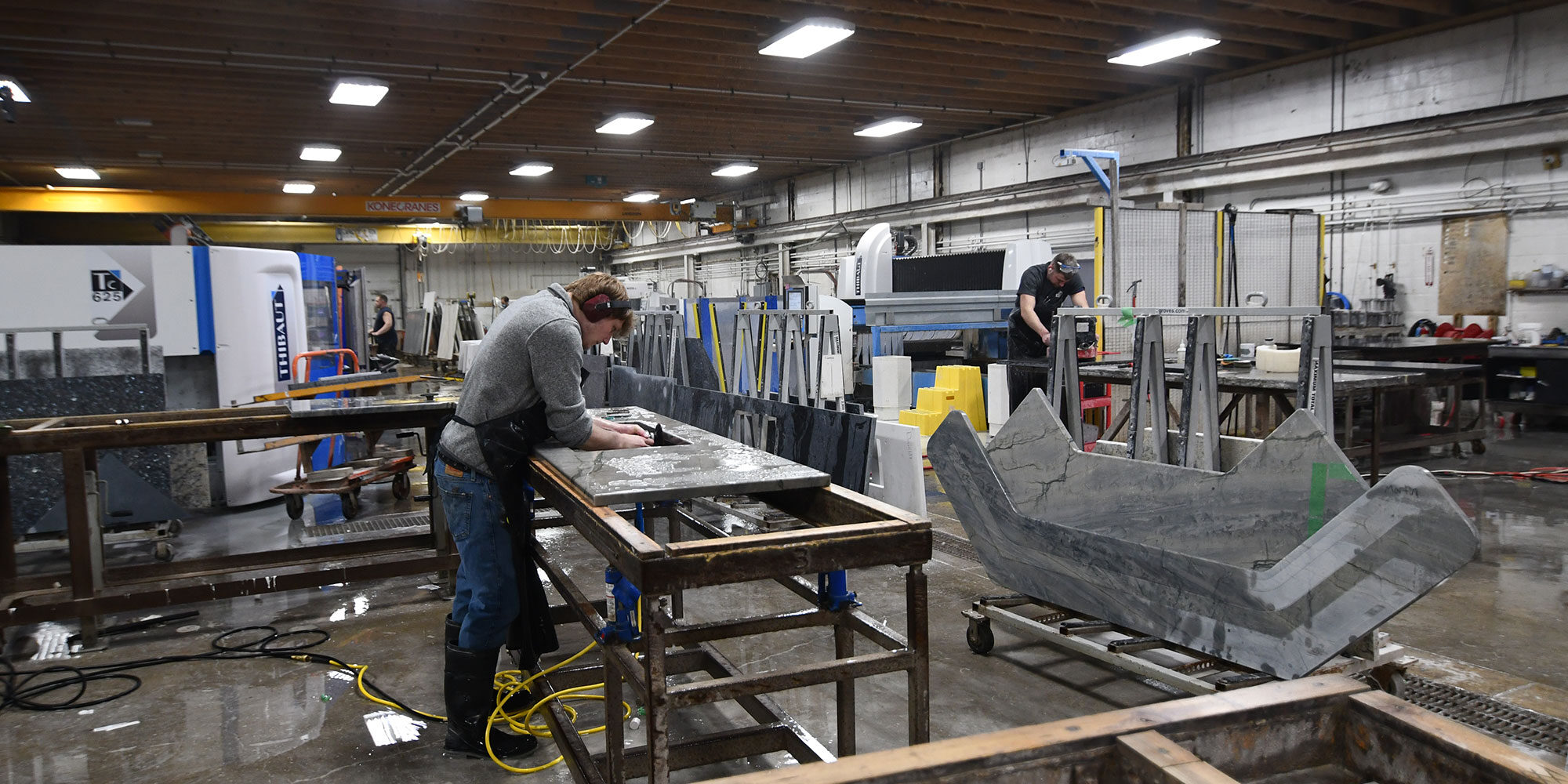
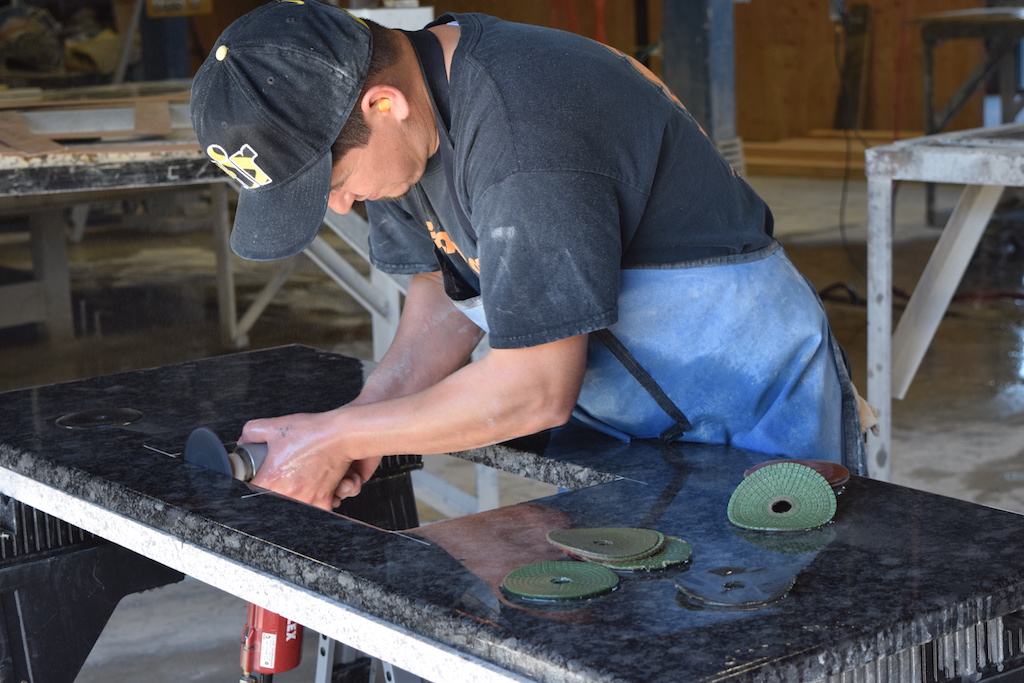
Countertop fabrication is a specialized industrial trade that involves the precision cutting, shaping, and finishing of raw materials—such as natural stone, engineered quartz, or porcelain—into functional architectural surfaces. While the material itself is a significant investment, the quality of the final installation depends almost entirely on the skill of the fabricator. These professionals bridge the gap between a raw mineral slab and a finished home feature, utilizing advanced machinery and artisanal hand-finishing techniques to ensure structural integrity and aesthetic alignment.
Understanding the operational standards and logistical requirements of local trade professionals is essential for successful project management. This guide provides a neutral, detailed overview of how to navigate the selection of countertop fabricators near me, the various technical approaches to stone processing, and the practical considerations for budgeting and installation. Readers will learn how to evaluate shop capabilities, understand the implications of different fabrication methods, and implement best practices for long-term surface management.
Understanding Countertop Fabricators Near Me
The core concept of a countertop fabricator involves the transformation of high-mass, brittle slabs into refined surfaces. When property owners search for countertop fabricators near me, they are typically looking for a facility that provides a turnkey service: templating (measuring), cutting, edge profiling, and final installation. The goal of this process is to achieve a perfect fit that accounts for the inevitable irregularities in walls and cabinetry, ensuring that the heavy material is safely supported and aesthetically pleasing.
People commonly approach fabricators either through a direct retail relationship or as part of a larger construction contract. Typical expectations include high-precision seams, polished edges that match the surface finish, and a secure mounting of sinks and hardware. The outcome of a successful partnership with a fabricator is a durable, level surface that enhances the utility of the kitchen or bathroom while adhering to local building codes and safety standards.
Key Categories of Fabrication Facilities
Fabrication shops differ significantly in their technology, scale, and specialization. Understanding these variations helps in matching a project’s complexity to the right provider.
Fabrication Facility Comparison Table
| Category / Type | Description | Common Use Case | Effort / Cost Level |
| Full-Service Stone Shop | Owns high-end CNC and waterjet machinery; stocks many slabs. | High-end residential; complex custom designs. | High |
| Prefabricated Installer | Cuts down pre-sized blanks rather than full custom slabs. | Rental properties; budget-conscious renovations. | Low to Moderate |
| Boutique Artisan Shop | Focuses on hand-finishing and rare materials (marble, soapstone). | Historic restorations; luxury furniture pieces. | Very High |
| Commercial Contractor | High-volume facility designed for speed and consistency. | Multi-unit apartments; hotels; office buildings. | Moderate |
| Material-Specific Specialist | Focuses exclusively on one type (e.g., stainless steel or wood). | Professional labs; industrial kitchens; butcher blocks. | Moderate to High |
Choosing between these providers involves assessing the unique needs of the project. A full-service shop is ideal for a kitchen with many curves or custom miters, whereas a prefabricated installer may be sufficient for a standard-sized bathroom vanity.
Practical Scenarios or Thematic Applications
Scenario 1: The Bespoke Residential Kitchen
In a custom home project, the fabricator must manage large-scale “waterfall” edges and complex vein-matching across multiple slabs.
-
Components: 3cm quartzite or marble, book-matched seams, and mitered edges.
-
Process: Laser templating, digital slab layout for pattern matching, and hand-polishing of visible joints.
-
Relevance: This scenario requires a fabricator with advanced digital imaging software to ensure the stone’s natural pattern flows logically from the horizontal counter to the vertical floor.
Scenario 2: High-Volume Multi-Family Housing
For a 50-unit apartment building, the priority shifts to speed, cost-efficiency, and absolute uniformity.
-
Components: 2cm engineered quartz, standardized eased edges, and drop-in sinks.
-
Process: Template-free production based on architectural drawings, bulk CNC cutting, and rapid-fire installation.
-
Relevance: This demonstrates the logistical capability of a fabricator to maintain quality control across hundreds of square feet of material with minimal variation.
Scenario 3: Specialized Medical or Laboratory Facility
In clinical settings, the fabricator must prioritize non-porosity, chemical resistance, and the elimination of crevices where bacteria can grow.
-
Components: Solid surface or specialized porcelain, coved backsplashes, and integrated basins.
-
Process: Heat-welding of seams (for solid surface) or epoxy bonding for porcelain, followed by rigorous gap-inspection.
-
Relevance: This application focuses on functional safety, where the fabricator’s skill in creating “monolithic” (single-piece) appearances is a hygienic requirement.
Comparison: Scenario 1 focuses on artisanal aesthetics; Scenario 2 on industrial scalability; Scenario 3 on technical safety and hygiene. Readers should identify which of these project types aligns with their current search for countertop fabricators near me.
Planning, Cost, and Resource Considerations

Effective planning is critical because stone fabrication is an “irreversible” process; once a slab is cut, it cannot be easily repaired if measured incorrectly.
Sample Project Budget Table
| Category | Estimated Amount / Effort | Explanation | Optimization Tips |
| Material Cost | $40 – $150 per sq. ft. | Dependent on stone rarity and brand (for quartz). | Select “Group 1” stones for lower material costs. |
| Templating Fee | $150 – $300 | Professional laser or physical measurement at the site. | Ensure all cabinets are level before the tech arrives. |
| Fabrication Labor | $20 – $50 per linear ft. | Cutting, edge profiling, and sink cutouts. | Minimize the number of cutouts (sinks, outlets) to save. |
| Installation & Delivery | $500 – $1,500 | Transport and secure placement on cabinets. | Clear the path to the kitchen to reduce labor time. |
Note: Figures are illustrative examples and will vary based on regional market rates and material complexity.
Fabrication Strategies, Tools, and Support Options
The methodology used in the shop directly impacts the precision of the final product.
-
Laser Templating: Using digital scanners to map the room.
-
Advantages: Extremely accurate; captures wall waves.
-
Disadvantages: Requires expensive equipment.
-
-
CNC Waterjet Cutting: A computer-controlled machine using high-pressure water and abrasive garnet.
-
Advantages: Can cut complex shapes without heat stress.
-
Disadvantages: High overhead costs.
-
-
Manual Bridge Saw: A traditional saw operated by a technician.
-
Advantages: Good for straight cuts; lower cost.
-
Disadvantages: Higher risk of human error on complex shapes.
-
-
Seam Setters: Suction-based tools used during installation.
-
Advantages: Pulls slabs together for a nearly invisible joint.
-
Disadvantages: Adds time to the installation process.
-
Safety, Risks, and Common Challenges
-
Inaccurate Templating: If the cabinets are not level or the walls are moved after templating, the stone will not fit. Prevention: Finalize all cabinetry before the fabricator arrives.
-
Slab Breakage: Natural stone has fissures that can snap during transport. Prevention: Verify the fabricator is insured and uses proper “A-frame” transport racks.
-
Silica Dust Risk: Fabrication creates hazardous dust. Prevention: Ensure the shop uses wet-cutting methods to protect their workers and the environment.
-
Poor Seam Placement: Putting a seam over a dishwasher or in a high-stress area. Prevention: Review the seam layout on the digital plan before cutting begins.
Maintenance, Best Practices, and Long-Term Management
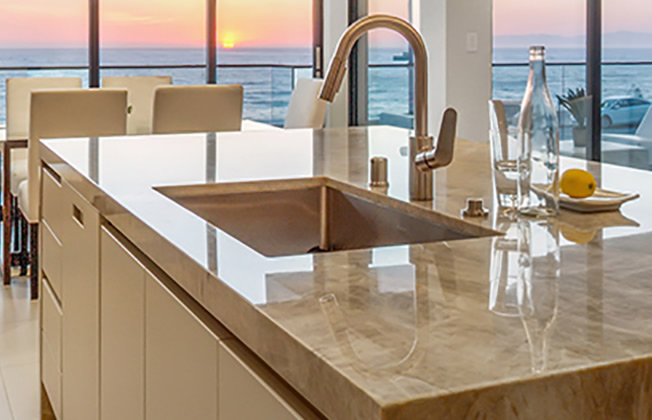
The relationship with a fabricator often extends beyond the installation through maintenance advice and repair services.
-
Sealant Application: For natural stone, fabricators should apply an initial high-grade sealer.
-
Support Check: Ensure that any overhangs exceeding 10–12 inches have proper steel brackets or corbels installed.
-
pH-Neutral Cleaning: Only use cleaners approved for the specific material to avoid stripping the sealer or dulling the resin.
-
Regular Review: Periodically inspect the caulking where the stone meets the backsplash to prevent moisture from reaching the cabinetry.
Documentation and FAQ
Tips for Organizing Information:
-
Keep a digital copy of the final CAD drawing provided by the fabricator.
-
Retain the specific name and batch number of the stone for future color matching.
Illustrative Examples:
-
Warranty Log: A homeowner records that the fabricator used “Sealer Brand X,” ensuring they follow the correct maintenance schedule to keep their 15-year warranty valid.
-
Repair File: A facility manager keeps a record of the shop that performed the original CNC work, allowing for a perfectly matched replacement piece if a section is damaged.
FAQ
Q: Do I buy the slab from the fabricator or a separate yard?
A: Both are common. Some fabricators have “in-house” stock, while others will have you select a slab at a wholesaler and then ship it to their shop for cutting.
Q: How long does the fabrication process take?
A: Typically, it takes 7 to 14 days from the date of the final template to the day of installation.
Q: Will the fabricator disconnect my plumbing?
A: Most fabricators are not licensed plumbers. They will mount the sink to the stone, but you will usually need a plumber to connect the drains and faucets.
Closing Summary
Selecting from the available countertop fabricators near me is a decision that impacts both the immediate aesthetic of a project and its long-term structural viability. By understanding the differences between manual and CNC-based shops, planning for the logistical weight of the material, and adhering to strict templating standards, property owners can ensure a high-quality outcome. The key to success lies in clear documentation, finalized cabinetry prep, and a professional installation that prioritizes level surfaces and secure seaming.