Dining Table Guide: Materials, Configurations, and Maintenance
The Comprehensive Guide to the Ashley Dining Table
The dining table serves as the primary functional anchor of the domestic social environment. Within the furniture industry, the Ashley dining table represents a specific approach to manufacturing that balances traditional aesthetics with modern industrial engineering. These tables are designed to meet the diverse spatial needs of contemporary housing, ranging from compact urban apartments to expansive formal dining rooms. Because the dining surface is subjected to significant mechanical stress, heat, and moisture, understanding its construction and material properties is essential for ensuring its longevity.
This guide provides a neutral, detailed overview of the various categories of dining surfaces, the mechanical systems involved in expandable designs, and the practical logistical considerations for planning a dining area. Readers will gain insight into the differences between solid wood, veneers, and engineered substrates, as well as the budgetary and maintenance requirements associated with each. By examining the intersection of ergonomic standards and material science, this article establishes a framework for evaluating the structural integrity and long-term utility of a dining installation.

Overview of the Ashley Dining Table
The core concept of an ashley dining table is rooted in the “Lifestyle Design” philosophy, which prioritizes furniture that adapts to specific decorative themes—such as farmhouse, contemporary, or industrial—while remaining accessible for mass-market residential use. Unlike bespoke or artisanal furniture, these tables are engineered for standardized assembly and global distribution. They often utilize a combination of solid wood for structural legs and frames, and high-quality veneers over engineered wood (MDF or particleboard) for the tabletop surfaces to ensure a uniform appearance and resistance to warping.
People commonly approach the selection of these tables with the goal of creating a cohesive “set” within a dining room. Expectations typically involve a balance of visual weight and durability, with many users seeking integrated features like butterfly leaves or storage drawers. The outcome of a successful dining room plan is a workspace that adheres to ergonomic “clearance” standards—allowing for 36 inches of space between the table and walls—while providing a stable, hygienic surface for food consumption and social interaction.
Key Categories and Material Variations
Dining tables are categorized primarily by their height, shape, and the mineral or organic composition of their surfaces.
Design Category Comparison Table
| Category / Type | Description | Common Use Case | Effort / Cost Level |
| Standard Height | 28–30 inches tall; traditional seating posture. | Formal dining; multi-generational homes. | Moderate |
| Counter Height | 34–36 inches tall; requires stools; “casual” feel. | Open-concept kitchens; breakfast nooks. | Moderate |
| Farmhouse / Trestle | Heavy solid wood bases with a central support beam. | Large families; rustic or traditional decor. | High |
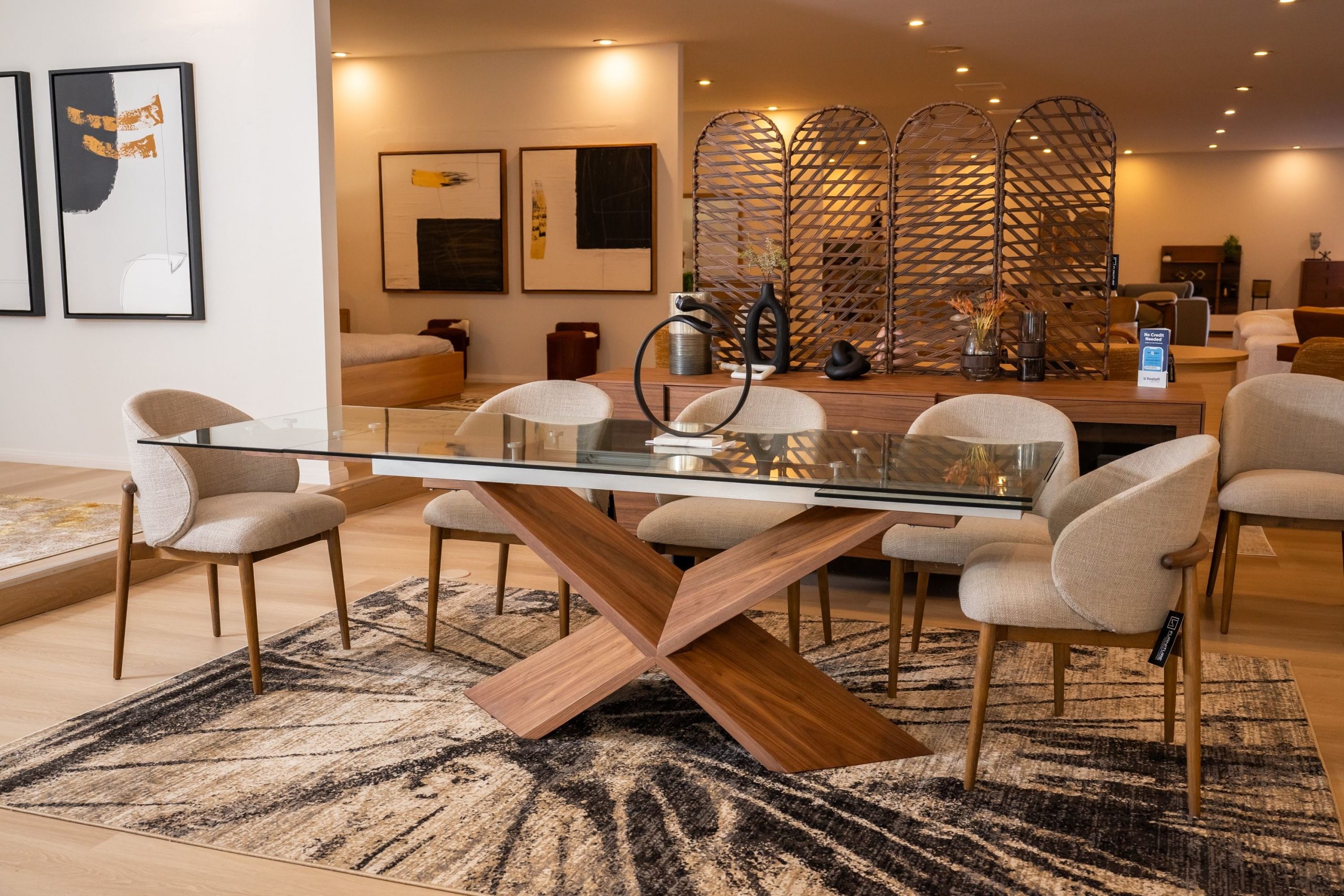
| Pedestal | A single central support leg; eliminates corner legs. | Circular rooms; small apartments; maximized legroom. | Moderate |
| Marble / Faux Stone | Heavy mineral top or a stone-patterned laminate. | Modern “glam” interiors; high-heat resistance. | High |
Choosing between these categories requires an assessment of both spatial volume and user mobility. For instance, pedestal tables are highly effective in small spaces because they allow for more flexible chair placement without interference from corner legs. Standard-height tables are generally more accessible for children and the elderly, whereas counter-height tables are often used in modern “great rooms” to create a seamless visual transition between a kitchen island and the dining area.
Practical Scenarios or Thematic Applications
Scenario 1: The Urban Small-Space Dining Zone
In environments where the dining area must also function as a workspace, the furniture must be compact and multi-functional.
-
Components: A round or square ashley dining table, drop-leaf extensions, and upholstered side chairs.
-
Steps: Measure the “swing” of nearby doors to avoid collisions; position the table near a window for task lighting; utilize the drop-leaf to expand only during meals.
-
Relevance: This scenario utilizes the spatial efficiency of “collapsible” designs, ensuring that a 100-square-foot zone remains navigable throughout the day.
Scenario 2: The Formal Holiday Hosting Area
Focuses on maximum capacity and the structural support required for heavy serving dishes and large groups.
-
Components: Long trestle-base table, removable center leaves, and high-back captain’s chairs.
-
Steps: Insert the expansion leaf and lock the internal tension clips; verify the “level” of the table on the area rug; ensure a 24-inch “elbow room” per guest.
-
Relevance: This application demonstrates the importance of “mechanical joinery” in expandable tables, where the center of the table must remain rigid even when fully extended.
Scenario 3: The Active Family “Craft and Meal” Station
Prioritizes ease of cleaning and resistance to mechanical impact (scratches/dents).
-
Components: Distressed wood finish, solid wood legs, and bench seating.
-
Steps: Apply a polyurethane top-coat for moisture protection; use felt pads on all chair and bench legs; implement a “placemat” policy for high-heat items.
-
Relevance: This scenario highlights the “renewable” nature of wood finishes, where a textured or “distressed” aesthetic can hide the minor wear-and-tear of daily family life.
Comparison: Scenario 1 focuses on spatial flexibility; Scenario 2 on social capacity; Scenario 3 on material durability. Readers should evaluate their project based on whether the primary stressor will be lack of space (Scenario 1) or high mechanical wear (Scenario 3).
Planning, Cost, and Resource Considerations

Preparation is critical because the weight and dimensions of a dining table can impact floor load-bearing and room navigation.
Sample Planning & Budget Table
| Category | Estimated Amount | Explanation | Optimization Tips |
| Table Material | $300 – $1,200 | Prices vary by wood species and top material (stone vs. wood). | Select veneers over solid wood for a similar look at a lower cost. |
| Assembly Labor | $50 – $150 | Professional assembly of legs and expansion mechanisms. | Follow “bolt-tighten” protocols 30 days after first use. |
| Area Rugs | $200 – $600 | Defines the zone and protects the floor from chair legs. | Rug should be 4 feet wider than the table. |
| Support Prep | $20 – $50 | Felt glides and leveling shims for uneven floors. | Use “adjustable” feet to prevent table wobbling. |
Note: Figures are illustrative examples and will vary based on regional labor rates and material rarity.
Mechanical Strategies and Support Options
The successful use of an ashley dining table relies on several strategies for structural stability.
-
Butterfly Leaf System: An integrated expansion leaf that folds and hides under the tabletop.
-
Advantages: No need for separate storage; one-person operation.
-
Disadvantages: Increases the weight of the table center; more moving parts to maintain.
-
-
Corner Block Joinery: A wooden or metal triangular brace at the junction of the leg and the apron.
-
Advantages: Dramatically increases the table’s resistance to “racking” (sideways wobbling).
-
Disadvantages: Requires periodic tightening of hex-bolts.
-
-
Leveling Feet: Adjustable screws at the base of the table legs.
-
Advantages: Corrects for uneven flooring (tiles/old wood) to prevent spillages.
-
Disadvantages: Can leave indentations in soft wood flooring if not used with a coaster.
-
-
Trestle Support: A horizontal beam (stretcher) connecting two pedestal-style ends.
-
Advantages: Provides superior weight distribution for long tables.
-
Disadvantages: Can interfere with the legroom of guests sitting on the sides.
-
Safety, Risks, and Common Challenges
-
Tipping Hazards: Lightweight pedestal tables can tip if significant weight is placed on one edge. Prevention: Ensure the base diameter is at least 50% of the tabletop diameter.
-
Thermal Shock: Placing a boiling pot directly on a veneer or stone top can cause the glue to fail or the stone to crack. Prevention: Always use trivets or heat-resistant mats.
-
Bolt Loosening: Over time, the vibration of use can loosen the hex-bolts in the legs. Risk: The table becomes structurally unstable. Prevention: Tighten all leg bolts every 6 months.
-
Moisture Rings: Condensation from cold glasses can seep into wood pores, causing “white rings.” Prevention: Use coasters and apply a water-resistant wax annually.
Maintenance, Best Practices, and Long-Term Management

The longevity of a dining table is determined by the transition from industrial finish to residential care.
-
Ongoing Maintenance Checklist:
-
Weekly: Dust with a soft microfiber cloth. Avoid silicone-based sprays which create a “sticky” buildup.
-
Monthly: Wipe with a very dilute solution of pH-neutral soap; dry immediately.
-
Bi-Annually: Inspect the leaf-expansion tracks. If they “stick,” apply a small amount of paraffin wax or dry silicone lubricant to the rails.
-
Annually: For natural wood tops, apply a high-quality furniture polish or lemon oil to prevent the wood from drying out in climate-controlled environments.
-
Documentation and Reporting
For high-use environments or commercial settings, documenting the care and specifications of the table is essential for insurance or resale.
Tips for Organizing Information:
-
Keep the assembly manual and the specific “Hex Key” size in a drawer near the table.
-
Note the “Finish Type” (e.g., NC Lacquer, Polyurethane, or Oil) to ensure you use the correct cleaning agents.
Illustrative Examples:
-
Insurance Management: A homeowner records the “Batch Number” found on the underside of the table; if the table is damaged during a move, they have the exact data for a value claim.
-
Repair Readiness: A facility manager records the specific wood stain color (e.g., “Dark Oak”) used on the table to ensure future touch-ups match perfectly.
FAQ
Q: Why is my dining table wobbling?
A: Most wobbling is caused by uneven flooring or loose leg bolts. Check the hex-bolts at the corner blocks first, then use the leveling feet to adjust for floor variations.
Q: Can I use a “magic eraser” on wood veneers?
A: No. Abrasive cleaners will strip the protective top-coat and leave a “dull” spot that cannot be easily repaired. Use only soft cloths and mild soap.
Q: Is “Veneer” less durable than “Solid Wood”?
A: Not necessarily. Modern veneers are highly resistant to the warping and cracking that can affect solid wood in centrally heated homes. However, they cannot be sanded down as many times as solid wood.
Closing Summary
The ashley dining table represents a versatile solution for modern residential environments, offering a balance of aesthetic diversity and industrial durability. By understanding the mechanical differences between trestle, pedestal, and standard four-leg designs, and by adhering to a disciplined maintenance schedule centered on pH-neutral cleaning and bolt-tightening, users can ensure a functional and stable dining surface for many years. Success with these tables relies on early spatial planning, an awareness of thermal limitations, and a commitment to protecting the material finish from moisture and mechanical stress.