Black Countertop Kitchen Guide: Materials, Design, and Maintenance
The Comprehensive Guide to Black Countertop Kitchen Design
The use of dark surfaces in food preparation environments represents a significant category of modern interior architecture. A black countertop kitchen utilizes high-density materials—ranging from volcanic igneous rocks to advanced sintered compacts—to create a distinct visual anchor within a room. Beyond aesthetic preferences, the selection of black surfaces involves technical considerations regarding light absorption, heat retention, and the visibility of surface particulates. Historically, dark work surfaces were prized for their ability to hide certain types of wear, but modern applications focus more on the material’s ability to provide high contrast against cabinetry and architectural hardware.
Understanding the technical attributes and maintenance requirements of dark surfaces is essential for successful project planning. This guide provides a neutral, detailed overview of the various material categories available, the practicalities of the installation process, and the specific care protocols required for dark pigments. Readers will learn how to evaluate material finishes, plan for budgetary needs, and implement long-term management strategies to prevent common issues such as mineral streaking or visible abrasions on dark planes.
Overview of Black Countertop Kitchen
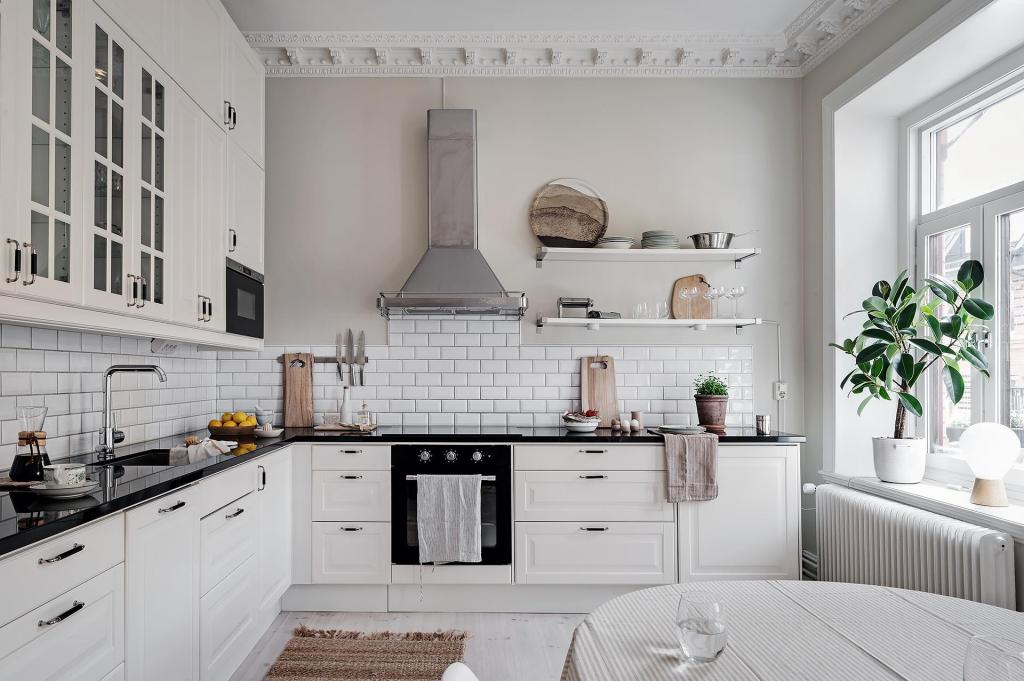
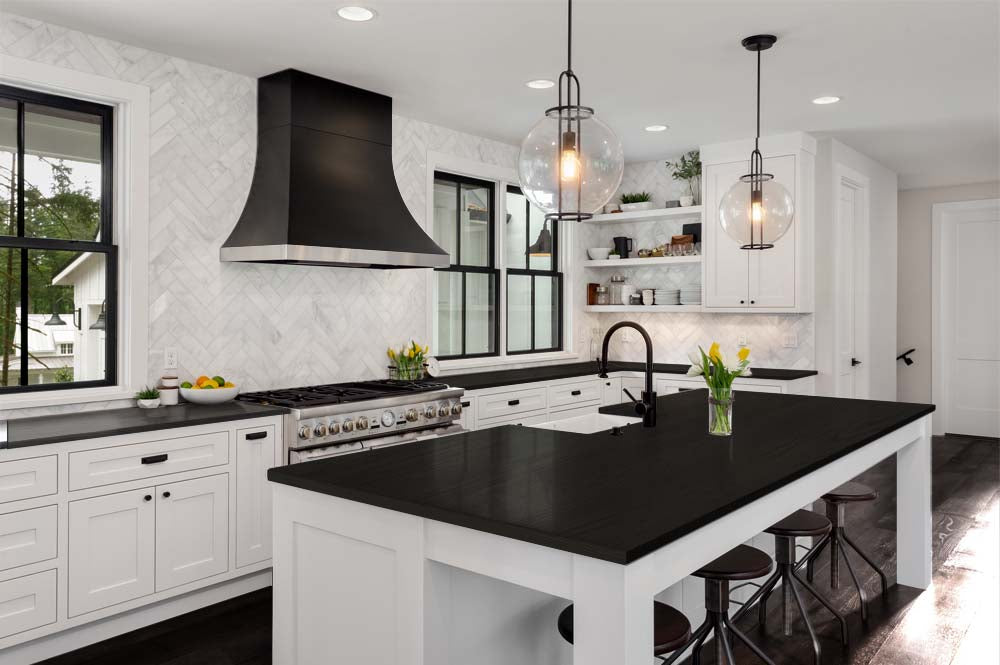
The core concept of a black countertop kitchen is centered on the utilization of dark-toned horizontal planes to define the workspace. In physics and design, black surfaces absorb a higher percentage of visible light compared to lighter surfaces, which can significantly alter the perceived dimensions and temperature of a room. People commonly approach this design route to achieve a “grounded” look or to emphasize “industrial” and “contemporary” themes. The goal is typically to create a sophisticated, high-contrast environment where the countertop serves as a neutral but bold backdrop for culinary activities.
Expectations for dark surfaces often involve an assumption of superior stain resistance; however, the outcome depends entirely on the porosity of the chosen material. While dark materials may conceal organic stains like wine or coffee better than white surfaces, they are more prone to showing “limescale” (white mineral deposits from hard water) and finger oils. Success in a dark-surfaced kitchen requires an understanding of how light interacts with different finishes—such as polished, honed, or leathered—and how these textures impact the daily cleaning routine.
Key Categories of Dark Materials
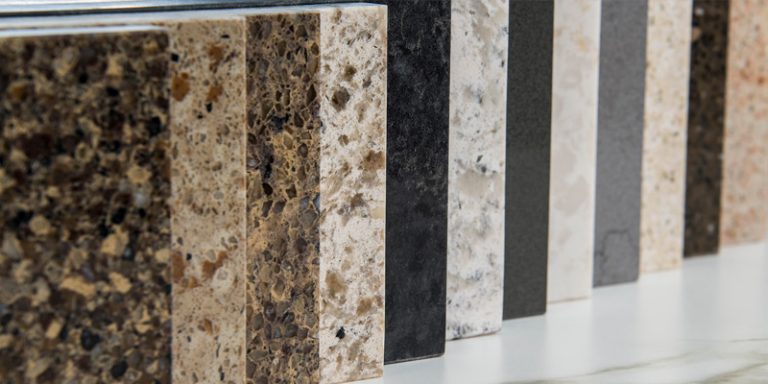
Black surfaces are available in a variety of mineral and synthetic compositions, each with unique performance characteristics.
Dark Material Comparison Table
| Category / Type | Description | Common Use Case | Effort / Cost Level |
| Absolute Black Granite | A dense, fine-grained igneous rock with minimal variation. | High-traffic residential and commercial kitchens. | Moderate to High |
| Soapstone | A talc-rich metamorphic rock; naturally non-porous and chemically inert. | Science laboratories and rustic residential designs. | High |
| Engineered Quartz | 90%+ quartz mineral bound with dark pigments and resin. | Modern apartments; areas requiring color uniformity. | Moderate |
| Black Porcelain | Sintered clay fired at extreme heat; virtually impervious. | Outdoor kitchens and ultra-minimalist interiors. | High |
| Black Stainless Steel | Steel with a dark PVD or oxide coating. | Industrial-themed prep zones and secondary bars. | High |
Choosing between these categories involves a trade-off between natural “patina” and industrial “perfection.” Soapstone, for example, will darken and change texture over time, whereas engineered quartz is designed to remain visually static. Polished finishes on dark stones provide the deepest “jet black” appearance but are the most likely to show reflections and fingerprints, while leathered or matte finishes provide a more tactile, muted aesthetic.
Practical Scenarios or Thematic Applications
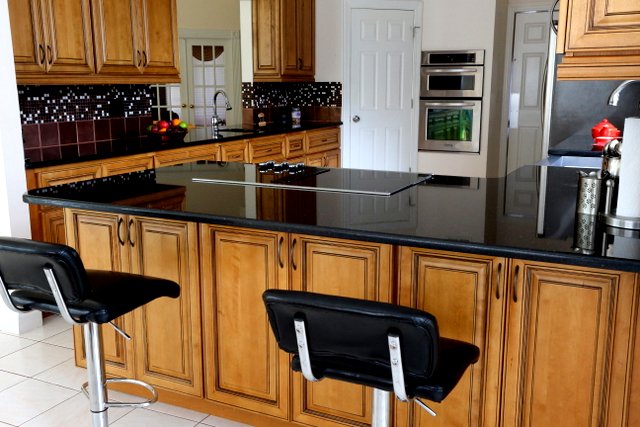
Scenario 1: The High-Contrast Contemporary Kitchen
This application uses dark surfaces to create a sharp boundary between white cabinetry and the work zone.
-
Components: Polished Absolute Black granite or black quartz, 3cm thickness, and minimalist eased edges.
-
Steps: Precise digital templating to ensure tight seams, under-cabinet lighting installation to counteract light absorption, and professional seaming.
-
Relevance: This scenario highlights the importance of supplemental lighting, as dark counters can create “shadow zones” that make food preparation difficult without proper task illumination.
Scenario 2: The Industrial Laboratory-Style Kitchen
Prioritizes chemical resistance and a matte, non-reflective workspace.
-
Components: Honed soapstone or matte sintered stone, integrated drainboards, and matching black sinks.
-
Steps: Sanding the surface to a specific grit, applying food-grade mineral oil (for soapstone), and installing heavy-duty support brackets.
-
Relevance: This demonstrates the functional use of dark, non-porous materials that can withstand high heat and acidic substances without permanent etching.
Scenario 3: The Outdoor Grilling and Dining Zone
Surfaces in this environment must endure UV exposure and temperature fluctuations.
-
Components: Black porcelain or UV-stable granite, mitered edges, and weatherproof substrates.
-
Steps: Selection of iron-free stone to prevent rust, use of exterior-grade adhesives, and ensuring a slight pitch for water runoff.
-
Relevance: Dark surfaces in outdoor settings absorb significant solar heat; this scenario requires the use of materials like porcelain that will not warp or fade under thermal stress.
Comparison: Scenario 1 focuses on visual impact; Scenario 2 on chemical utility; Scenario 3 on environmental resilience. Readers should identify their primary use case to determine if a natural stone (with variation) or an engineered slab (with uniformity) is appropriate.
Planning, Cost, and Resource Considerations
Planning is vital because dark slabs, particularly rare natural stones, can vary significantly in price and availability. Furthermore, the weight of dense stones like granite requires specialized cabinetry reinforcement.
Sample Planning & Budget Table
| Category | Estimated Amount / Effort | Explanation | Optimization Tips |
| Material (Slabs) | $50 – $150 per sq. ft. | Rare granites or through-body porcelain cost more. | Select “standard” black quartz for better value. |
| Fabrication | $25 – $55 per linear ft. | Includes CNC cutting and edge polishing. | Use simple square edges to reduce labor hours. |
| Installation | $500 – $1,200 | Professional labor for delivery and secure placement. | Ensure clear site access to prevent “difficult carry” fees. |
| Lighting Prep | $200 – $600 | Adding LED task lighting to balance dark surfaces. | Plan electrical runs before the counters are installed. |
Note: Figures are examples for educational purposes and vary by region and material rarity.
Strategies, Tools, and Support Options
The successful execution of a black countertop kitchen relies on tools that manage the visual and physical properties of dark materials.
-
Laser Templating: Digital measuring that creates a CAD file of the cabinetry.
-
Advantages: Captures wall irregularities for a “zero-gap” fit.
-
Disadvantages: Increases the initial cost of fabrication.
-
-
Color-Matched Epoxies: Specialized resins used to join two slabs.
-
Advantages: For black materials, a perfect color match makes seams nearly invisible.
-
Disadvantages: Requires an expert technician to mix pigments correctly.
-
-
Honing/Leathering Tools: Abrasive pads used to change the surface texture.
-
Advantages: Reduces glare and hides fingerprints.
-
Disadvantages: Can make the stone slightly more porous initially.
-
-
Vacuum Seam Setters: Suction tools that pull slabs together during installation.
-
Advantages: Ensures the dark planes are perfectly level at the joint.
-
Disadvantages: Adds time to the on-site installation process.
-
Safety, Risks, and Common Challenges
-
Visible Limescale: In areas with hard water, white mineral deposits are highly visible on dark surfaces. Prevention: Use a water softening system or dry the area around the sink after each use.
-
Thermal Shock: While stone is heat-resistant, localized heat from a hot pan can cause dark resins (in quartz) to discolor. Prevention: Always use trivets or hot pads.
-
Etching on Dark Marble: Acidic liquids like lemon juice will leave dull white marks on dark marble. Prevention: Choose silicate-based stones like granite or soapstone instead of carbonate-based marble.
-
Shadowing: Without proper lighting, black counters can make a kitchen feel smaller or darker. Prevention: Balance dark counters with light cabinetry or reflective backsplashes.
Maintenance, Best Practices, and Long-Term Management
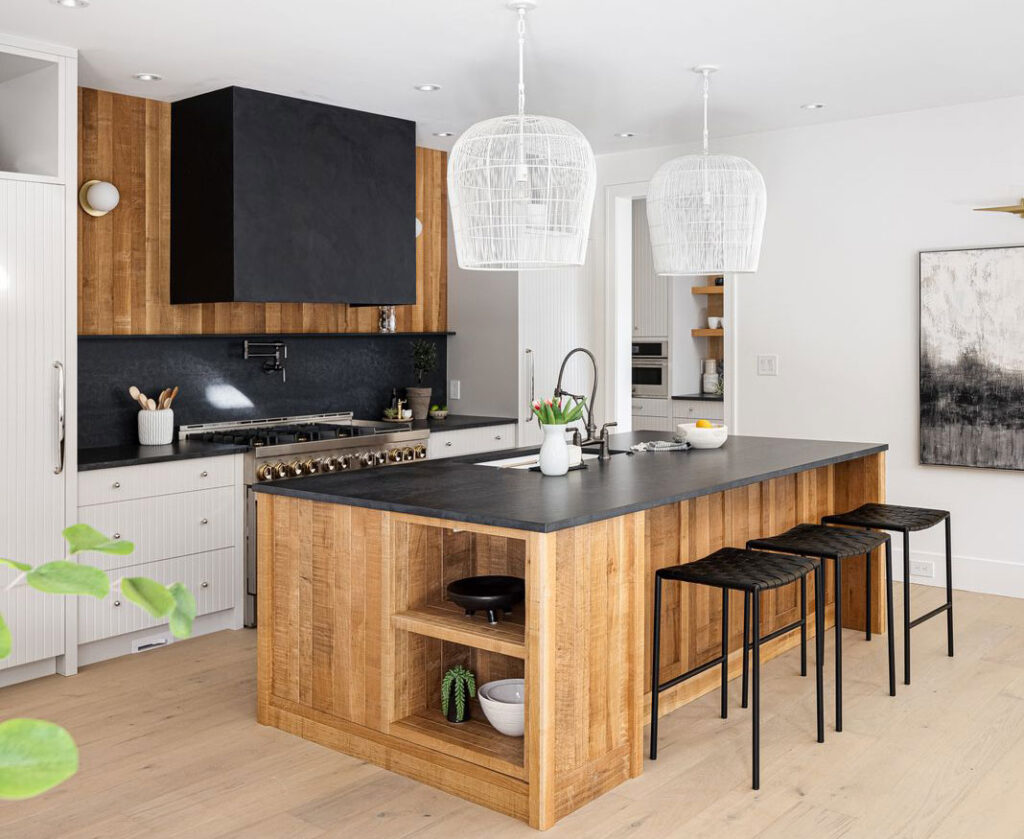
The long-term clarity of a dark surface is determined by the cleaning methodology used.
-
Daily Routine: Use a soft microfiber cloth and a pH-neutral cleaner. Avoid abrasive “scrub” pads, which can create micro-scratches that appear as “haze” on polished black surfaces.
-
The “Streak” Test: Dark counters are prone to showing streaks from soapy residue. Use a dry cloth to buff the surface after cleaning to maintain a uniform appearance.
-
Resealing (Natural Stone): Perform a “water test” annually. If water no longer beads on the surface, reapply an impregnating sealer to prevent oil absorption.
-
Fingerprint Management: For matte or honed finishes, use a specialized stone soap that helps repel oils from hands.
Documentation and Reporting
For large-scale projects, documenting the specific batch and finish is standard for future repairs.
Tips for Organizing Information:
-
Keep a record of the manufacturer and the specific color code (e.g., “Absolute Black Premium”).
-
Store the contact information of the fabricator who performed the final polish.
Illustrative Examples:
-
Repair Readiness: A homeowner keeps a small remnant of their black granite; if an edge chips, a specialist can “dust” the remnant to create a color-matched epoxy filler.
-
Facility Management: A property manager for a commercial lounge records the “honing grit” used on the counters so that future refinishing matches the existing texture.
FAQ
Q: Does black quartz get hotter than white quartz? A: If exposed to direct sunlight (e.g., through a window), black surfaces will absorb more radiant heat and feel warmer to the touch than lighter surfaces.
Q: Is black granite harder than other colors? A: Generally, yes. Many “Absolute Black” granites are actually “gabbro” or “dolerite,” which geologically are denser and less porous than lighter-colored granites.
Q: Will black countertops make my kitchen look small? A: They can if the room lacks adequate lighting. However, when paired with light walls or reflective surfaces, they create “depth” that can make a kitchen feel more expansive.
Closing Summary
A black countertop kitchen provides a durable, high-contrast, and sophisticated solution for modern architectural spaces. By understanding the geological differences between materials—such as the chemical inertness of soapstone versus the density of granite—users can select a surface that fits their specific maintenance tolerance. Success with dark surfaces relies on professional templating, the implementation of supplemental task lighting, and a commitment to pH-neutral cleaning to prevent mineral buildup and surface hazing over the life of the installation.