Acoustic Wall Panels Guide: Science, Installation, and Applications
The Comprehensive Guide to Acoustic Wall Panels
Acoustic wall panels are specialized architectural treatments designed to manage the behavior of sound within a confined space. Unlike standard wall coverings, these panels are engineered with specific densities and porosities to mitigate common auditory issues such as reverberation, flutter echo, and standing waves. By absorbing or diffusing sound energy rather than allowing it to bounce off hard surfaces, these systems significantly improve speech intelligibility and overall sound quality in residential, commercial, and industrial environments.
Understanding the technical attributes and logistical requirements of these systems is essential for successful spatial planning. This guide provides a neutral, detailed overview of the various material categories, the mechanical role of absorption coefficients, and the practicalities of long-term maintenance. Readers will gain insight into how these systems influence room acoustics, fire safety compliance, and environmental comfort, providing a textbook-quality framework for evaluating acoustic solutions in contemporary architecture.

Overview of Acoustic Wall Panels
The core concept of acoustic wall panels centers on the conversion of sound energy into heat energy through friction. When sound waves strike a hard, non-porous surface like drywall or glass, they reflect back into the room, creating an echo. Acoustic panels utilize porous materials—such as fiberglass, mineral wool, or open-cell foam—to “trap” these waves. As the air molecules vibrate within the tiny pores of the panel, the friction generates a negligible amount of heat, effectively removing the energy from the room’s auditory field.
People commonly approach acoustic treatment with the goal of “deadening” a space or making a room feel more intimate. Typical expectations involve a reduction in background noise levels and a clearer audio experience for music or conversation. The outcome of a successful application is a balanced room where sound is controlled but not completely eliminated, adhering to specific Noise Reduction Coefficient (NRC) ratings. These ratings, ranging from $0.0$ to $1.0$, indicate the percentage of sound a panel can absorb, with $1.0$ representing $100\%$ absorption.
Key Categories and Material Variations
Acoustic treatments are categorized by their mineral or synthetic composition and the specific frequency ranges they are designed to target.
Category and Material Comparison Table
| Category / Type | Description | Common Use Case | Effort / Cost Level |
| Fiberglass / Mineral Wood | Rigid boards wrapped in acoustically transparent fabric. | Professional studios; office boardrooms. | High / Moderate |
| Acoustic Foam | Open-cell polyurethane foam with convoluted (wedge) shapes. | Podcasting nooks; temporary setups. | Low / Low |
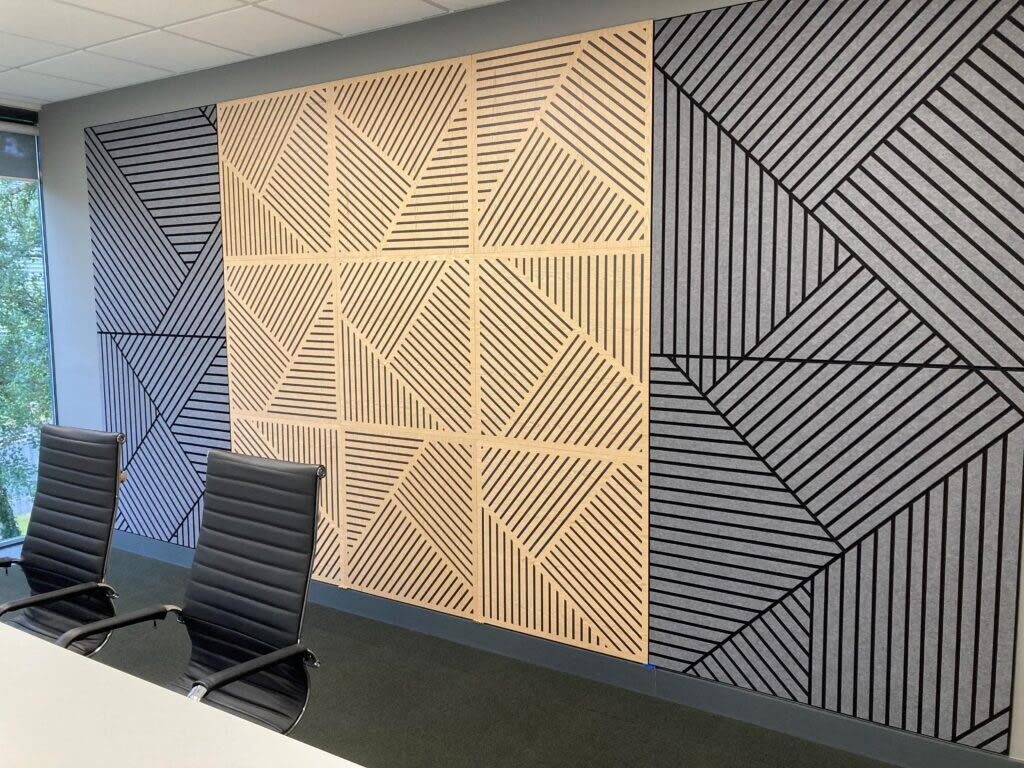
| PET Polyester Felt | Firm panels made from recycled plastic fibers. | Modern offices; school hallways; minimalist decor. | Moderate / Moderate |
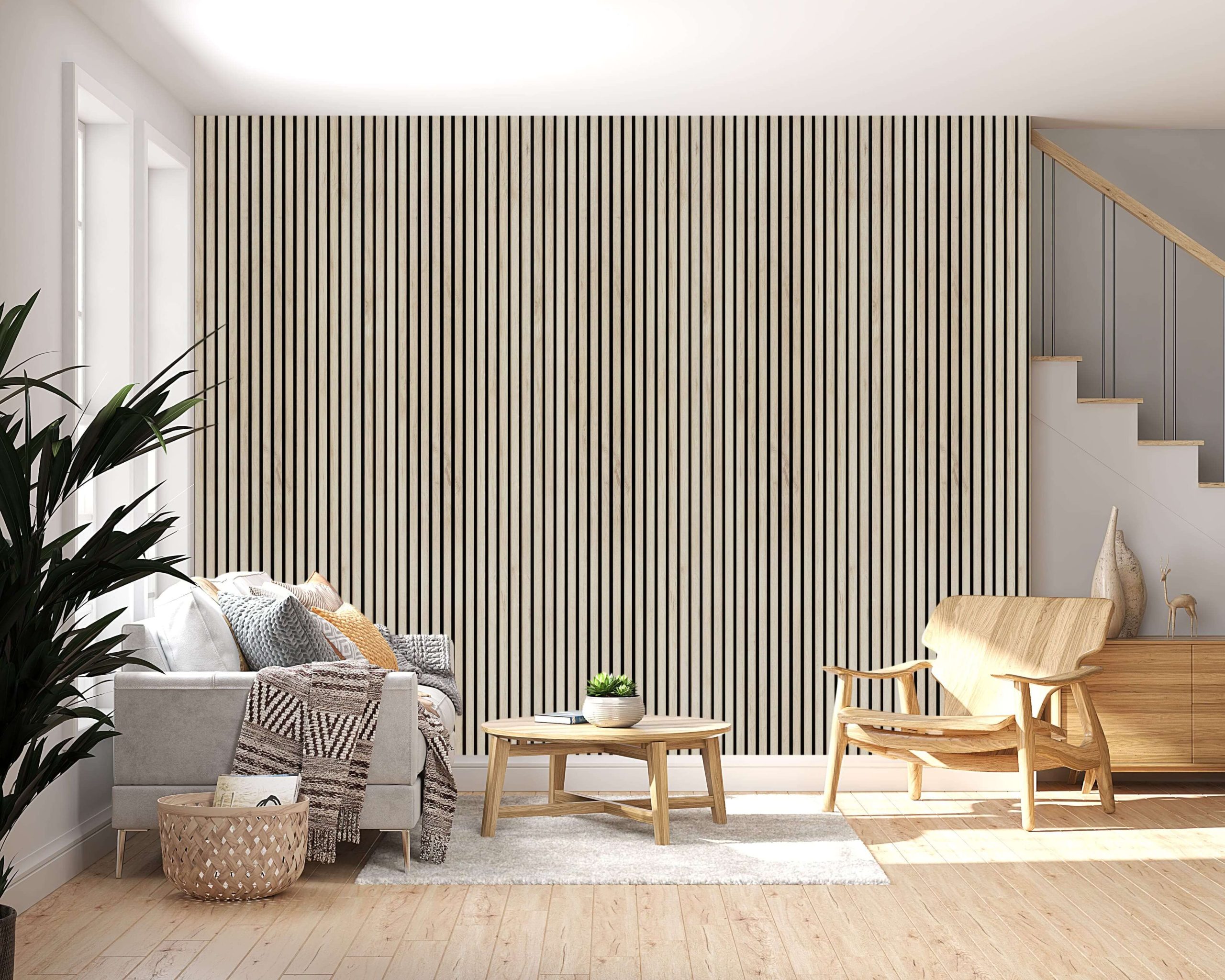
| Wood Slat / Micro-perf | Wooden faces with porous backing or tiny holes. | Concert halls; luxury home theaters. | High / High |
| Fabric-Wrapped Bass Traps | Thick, dense panels designed for room corners. | Recording studios; high-fidelity listening rooms. | Moderate / Moderate |
Choosing between these categories involves a trade-off between aesthetic integration and technical performance. Fiberglass and mineral wool offer the highest NRC ratings across a broad frequency spectrum but require professional fabric wrapping. PET felt is increasingly popular for its durability and sustainable origins, though it is typically less effective at absorbing low-frequency bass compared to thicker mineral-based panels.
Practical Scenarios and Applications
Scenario 1: The Modern Open-Concept Office
Focuses on the reduction of ambient “chatter” and the prevention of sound travel in a space with high ceilings and hard floors.
-
Components: PET felt panels, vertical baffles, and fabric-wrapped wall units.
-
Steps: Identify primary reflection points (parallel walls); mount panels at “speech level” (3 to 6 feet from the floor); distribute panels evenly across the perimeter.
-
Relevance: This scenario utilizes acoustic wall panels to increase worker productivity by lowering the cognitive load required to filter out background noise.
Scenario 2: The Residential Home Theater
Prioritizes the accuracy of the audio system by eliminating “slap echo” and managing low-end frequencies.
-
Components: Thick fiberglass panels at “first reflection points” and bass traps in corners.
-
Steps: Locate reflection points using the “mirror method”; install 2-inch thick panels on side walls; place bass traps in all four corners to prevent low-end “muddiness.”
-
Relevance: This application demonstrates the “critical listening” requirement, where the room itself must not interfere with the intended frequency response of the speakers.
Scenario 3: The Hospitality/Restaurant Environment
Aims to allow for comfortable conversation at individual tables despite high background noise from music and other guests.
-
Components: Decorative micro-perforated wood panels or high-NRC ceiling clouds.
-
Steps: Calculate the total surface area of hard materials (stone, glass); apply treatment to at least $20\%$ of the wall surface; prioritize the ceiling if wall space is limited.
-
Relevance: This highlights the “Lombard Effect,” where people speak louder as the environment gets noisier; acoustic panels break this cycle by lowering the noise floor.
Comparison: Scenario 1 focuses on general ambient noise reduction; Scenario 2 on technical audio precision; Scenario 3 on speech intelligibility in social settings. Readers should select a material thickness based on whether they need to absorb high-pitched voices (thin panels) or deep musical tones (thick panels).
Planning, Cost, and Resource Considerations
Preparation is critical because acoustic materials can be bulky and may require specific wall-load considerations. Planning must account for the “Air Gap” strategy, where spacing a panel away from the wall can increase its low-frequency absorption.
Sample Planning & Budget Table
| Category | Estimated Amount | Explanation | Optimization Tips |
| Materials (Panels) | $5 – $50 per sq. ft. | Cost varies by core material and fabric quality. | Buy pre-fabricated panels to save on labor. |
| Hardware / Mounting | $1 – $5 per sq. ft. | Z-clips, impaling clips, or construction adhesive. | Use Z-clips for easy removal and cleaning. |
| Labor (Professional) | $15 – $40 per sq. ft. | Includes measurement, leveling, and site cleanup. | Group installations into a single visit. |
| Fire-Rating Testing | $0 – $500 | Ensuring materials meet local commercial codes. | Look for “Class A” fire-rated certifications. |
Note: Figures are examples and vary based on regional labor rates and material rarity.
Strategies, Tools, and Support Options
The successful implementation of an acoustic scheme relies on several technical strategies to manage sound effectively.
-
Reflection Point Analysis: Locating where sound first hits the walls.
-
Advantages: Ensures maximum effectiveness with the minimum number of panels.
-
Disadvantages: Requires basic knowledge of geometry or acoustic software.
-
-
Impaling Clips: Metal plates with prongs that “bite” into the back of a panel.
-
Advantages: Very secure; easy to align during installation.
-
Disadvantages: Causes minor damage to the wall; difficult to reposition.
-
-
Z-Clip Mounting: Interlocking metal rails.
-
Advantages: Allows panels to be easily removed for wall painting or cleaning.
-
Disadvantages: Higher hardware cost; requires precise leveling.
-
-
Air Gapping: Mounting panels 1 to 2 inches away from the wall surface.
-
Advantages: Significantly increases the absorption of lower frequencies without thicker panels.
-
Disadvantages: Makes the panels protrude further into the room.
-
Safety, Risks, and Common Challenges
-
Fire Safety Compliance: Many foams are highly flammable. Risk: Rapid flame spread and toxic smoke. Prevention: Only use “Class A” fire-rated materials in commercial or public spaces.
-
Fiberglass Irritation: Raw fiberglass or mineral wool fibers can cause skin and lung irritation. Safety: Ensure panels are properly encapsulated in fabric or have resin-hardened edges.
-
Weight Management: Heavy mineral wool panels can tear away from drywall if not anchored. Prevention: Use appropriate anchors or attach mounting hardware directly to wall studs.
-
Over-Damping: Installing too much absorption can make a room feel “claustrophobic” or unnatural. Prevention: Aim for a “live/dead” balance; treat approximately $15\%–30\%$ of wall surface area for standard use.
Maintenance, Best Practices, and Long-Term Management
The longevity of acoustic wall panels is determined by the care of the exterior fabric and the stability of the mounting hardware.
-
Ongoing Best Practices Checklist:
-
Weekly/Monthly: Lightly vacuum panels with a soft brush attachment to remove dust. Do not use high-powered suction, which can pull fibers through the fabric.
-
Humidity Control: Maintain a stable environment ($40\%–60\%$ humidity) to prevent wooden frames from warping or adhesives from failing.
-
Stain Removal: Use only dry-cleaning solvents or specialized upholstery cleaners on fabric-wrapped panels. Avoid saturating the panel with water.
-
Hardware Check: Bi-annually inspect Z-clips or impaling clips to ensure the panel has not shifted or loosened due to building vibration.
-
Documentation and Reporting
For professional or commercial environments, documenting the acoustic performance and safety data is a standard requirement.
Tips for Organizing Information:
-
Keep the “Spec Sheets” from the manufacturer, specifically noting the NRC and fire rating.
-
Store samples of the exterior fabric for future color matching if panels need replacement.
Illustrative Examples:
-
Insurance Compliance: A restaurant owner keeps the “Class A Fire Rating” certificate in their permanent file; if a fire occurs, they have proof that the wall treatments met local safety codes.
-
Acoustic Verification: A studio manager records the “Before and After” RT60 (reverberation time) measurements to prove that the investment in panels achieved the desired audio environment.
FAQ
Q: Will acoustic wall panels block noise from my neighbors?
A: Generally, no. Acoustic wall panels are designed for absorption (improving sound inside the room). Soundproofing (blocking sound from entering/leaving) requires high-mass materials inside the wall structure.
Q: Can I paint my acoustic panels?
A: Painting fabric-wrapped or foam panels will clog the pores and ruin their acoustic properties. Only micro-perforated wood panels are designed with finishes that do not interfere with sound.
Q: How many panels do I need?
A: For a standard home office, treating $15\%–20\%$ of the wall area is usually sufficient. For a recording studio, this may increase to $50\%–70\%$.
Closing Summary
Acoustic wall panels represent a critical intersection of physics and interior design. By prioritizing high-NRC materials, adhering to strict fire safety standards, and strategically placing panels at reflection points, users can significantly enhance the auditory comfort of any environment. Success with these systems relies on a balance of absorption and diffusion, a commitment to proper structural mounting, and a disciplined maintenance routine to ensure the porous materials remain free of dust and debris over their lifespan.