Marble Countertops Guide: Geological Properties, Selection, and Care
The Comprehensive Guide to Marble Countertops
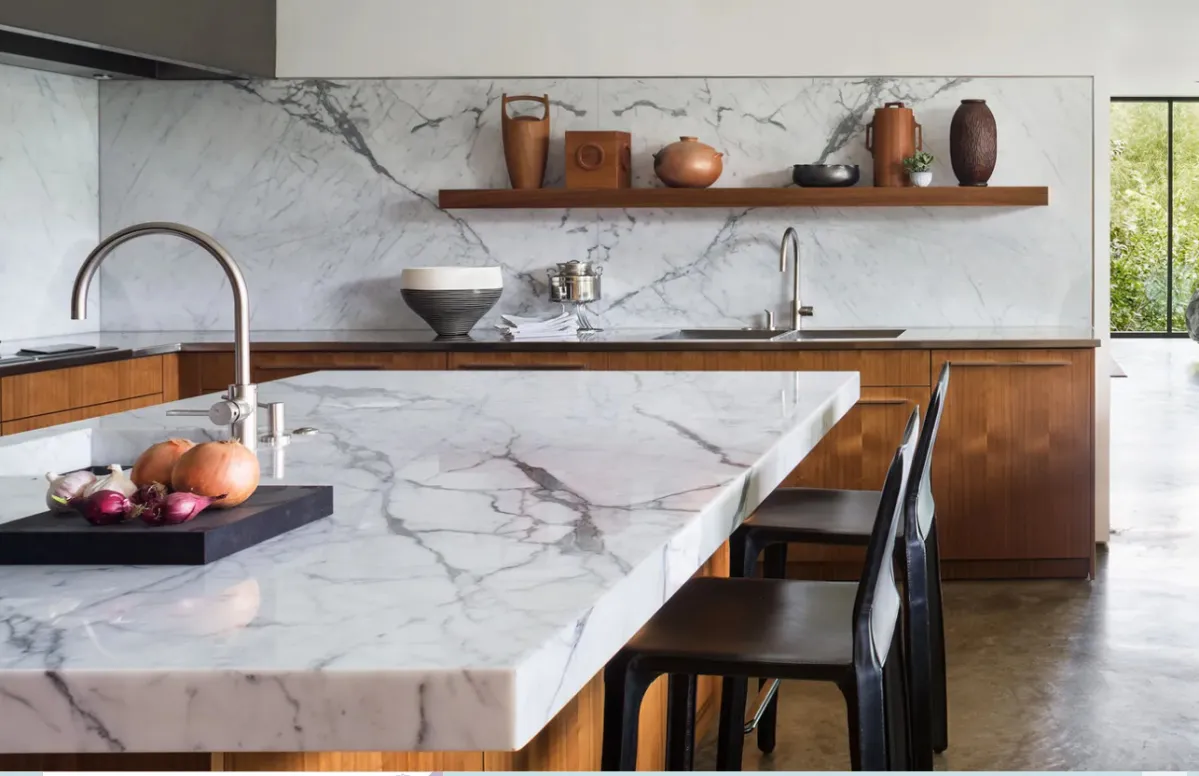
Marble is a metamorphic rock that forms when limestone is subjected to the intense heat and pressure of orogeny (mountain building). This process causes a recrystallization of the original carbonate mineral grains, resulting in a dense rock typically composed of an interlocking mosaic of carbonate crystals. In architectural applications, marble is quarried and sliced into slabs to create surfaces known for their distinctive veining, which is caused by mineral impurities such as clay, silt, sand, or iron oxides originally present in the limestone.
Understanding the technical characteristics and maintenance requirements of this stone is essential for its successful implementation in residential or commercial design. This guide provides a neutral, detailed overview of how marble is sourced, categorized, and managed over time. Readers will gain insight into the physical properties of the stone, the logistical considerations of installation, and the specific chemical vulnerabilities that define its long-term care.

Overview of Marble Countertops
Marble is classified as a “soft” natural stone compared to igneous rocks like granite. From a chemical perspective, it consists primarily of calcium carbonate, which makes it highly reactive to acids. When utilized as marble countertops, the material provides a cool-to-the-touch surface that has been used in architecture for millennia. Because it is a product of geological history, no two slabs are identical, offering a level of aesthetic variation that is impossible to replicate exactly in synthetic materials.
Most users approach this material with the goal of achieving a classic, bright aesthetic, particularly in kitchens and bathrooms. However, the use of marble involves an expectation of “patina”—the natural aging process where the stone develops marks of use over time. Outcomes generally involve a high-performance surface that is heat-resistant but requires a more disciplined maintenance routine than engineered stone or harder silicates.
Key Categories and Geological Variations
Marble is categorized by its quarry of origin, its base color, and the intensity of its veining. These distinctions are not merely aesthetic; they often correlate with the density and porosity of the specific slab.
Material Category Comparison Table
| Category / Type | Description | Common Use Case | Effort / Cost Level |
| Carrara | Grayish-white base with soft, feathered blue-gray veining. | Large-scale residential flooring and countertops. | Moderate |
| Calacatta | Bright white base with thick, bold, and dramatic dark veining. | Luxury kitchen islands and statement backsplashes. | High |
| Statuary | Semi-translucent white base with distinct, heavy gray veins. | High-end custom furniture and formal vanities. | High |
| Danby | Sourced from Vermont, USA; known for lower absorption rates. | Kitchen work surfaces requiring higher durability. | Moderate to High |
| Emperador | Brown base with irregular, light-colored “spiderweb” veining. | Decorative accents and bathroom surfaces. | Moderate |
Choosing between these types requires an assessment of the environment. For example, Vermont Danby is often selected for kitchens because it is geologically denser than many European varieties, making it slightly more resistant to moisture and staining.
Practical Scenarios or Thematic Applications
Scenario 1: The Pastry and Baking Station

Marble’s natural thermal mass allows it to stay cooler than room temperature, which is a physical property highly valued in professional and home baking.
-
Components: Thick 3cm slabs, honed finish to hide scratches, and wide-radius edges.
-
Steps: Leveling the base cabinetry, sealing the surface with food-safe impregnators, and maintaining a clutter-free zone.
-
Relevance: This scenario utilizes the stone’s thermodynamic properties to prevent butter in doughs from melting during the rolling process.
Scenario 2: The Formal Master Suite Vanity
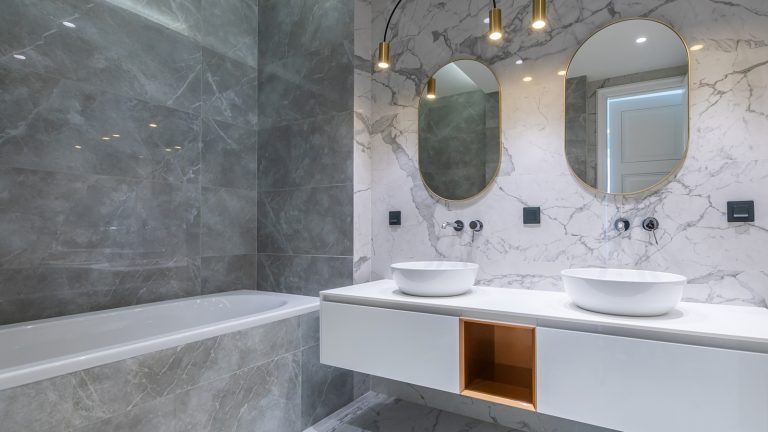
In low-traffic, high-moisture environments, marble provides a luminous quality that brightens smaller spaces.
-
Components: Polished finishes for high shine, undermount porcelain sinks, and matching marble backsplashes.
-
Steps: Precision cutting for faucet holes, applying moisture-resistant caulk at the wall junction, and using specialized stone cleaners.
-
Relevance: This demonstrates the material’s use as a luxury architectural finish where visual impact is the primary objective.
Scenario 3: Heritage or Historical Restoration
Marble is frequently used to match or restore surfaces in buildings that require period-accurate materials.
-
Components: Slab matching via “book-matching” (placing two mirrored slabs together), custom edge profiles (Ogee or Dupont), and traditional thicknesses.
-
Steps: Sourcing stone from specific historical quarries, hand-finishing edges, and using traditional mortar or modern adhesives depending on the structure.
-
Relevance: This scenario highlights marble’s longevity and its role in architectural history.
Comparison: Scenario 1 focuses on the functional temperature of the stone; Scenario 2 prioritizes aesthetics in a moisture-heavy zone; Scenario 3 emphasizes historical continuity. Readers should select their marble variety based on whether they prioritize physical performance or visual style.
Planning, Cost, and Resource Considerations
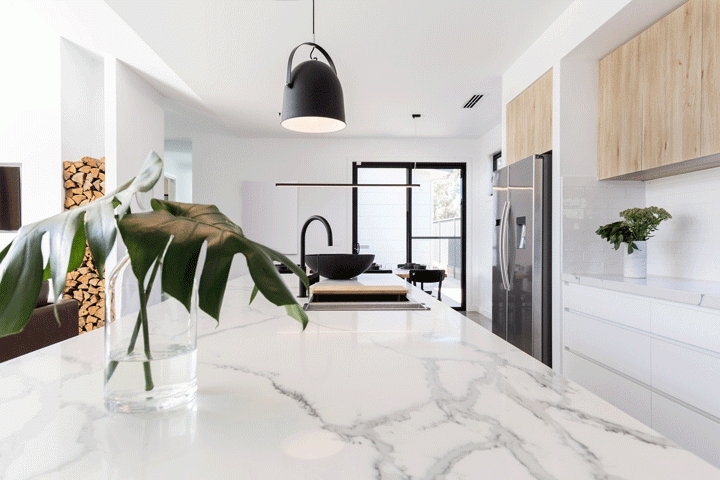
Preparation is critical because marble is more prone to cracking during transport and installation than other materials. Accurate budgeting must account for potential breakage and the premium cost of high-grade slabs.
Sample Planning & Budget Table
| Category | Estimated Amount / Effort | Explanation | Optimization Tips |
| Material (Slabs) | $60 – $250 per sq. ft. | Rare patterns (Calacatta) cost significantly more than common ones (Carrara). | Visit the stone yard in person to pick the specific slab. |
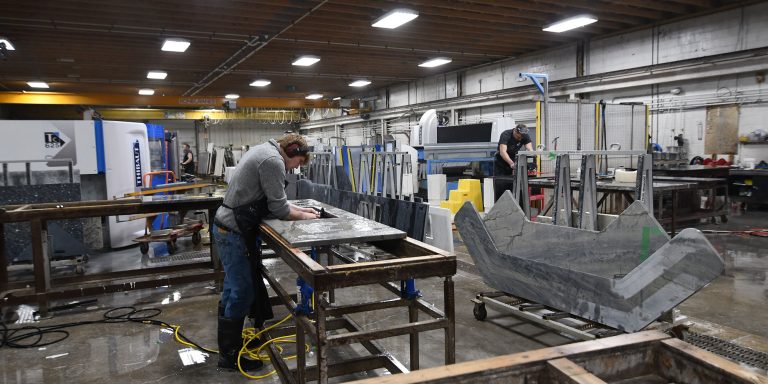
| Fabrication | $30 – $60 per linear ft. | Includes CNC cutting and delicate hand-polishing of edges. | Minimize the number of cutouts to reduce labor risk. |
| Installation | $400 – $1,200 total | Specialized labor to ensure the heavy stone is level and supported. | Ensure the floor and cabinets are reinforced for weight. |
| Sealing / Finishing | $150 – $400 | Professional application of high-grade chemical sealers. | Choose a “honed” finish to reduce the visibility of etching. |
Note: Figures are illustrative examples and will vary based on regional labor and stone availability.
Strategies, Tools, and Support Options
Successful implementation of marble countertops requires specialized tools to manage the stone’s relative fragility and weight.
-
Honed vs. Polished Finishes: A “honed” finish is matte, while “polished” is reflective.
-
Advantages: Honed hides “etching” (dull spots from acid) better than polished.
-
Disadvantages: Honed finishes are more porous and can stain more easily if not sealed.
-
-
Fiberglass Reinforcement: Applying a mesh backing to the slab during fabrication.
-
Advantages: Increases the tensile strength of the stone, preventing cracks during transport.
-
Disadvantages: Adds a small amount of thickness to the slab.
-
-
Mitered Edges: Joining the top slab to a vertical piece at a 45-degree angle.
-
Advantages: Creates the appearance of a much thicker, more massive block of stone.
-
Disadvantages: The sharp edge is more susceptible to chipping.
-
-
Impregnating Sealers: Liquid chemicals that sink below the surface to clog pores.
-
Advantages: Provides a window of time to clean spills before they stain.
-
Disadvantages: Does not prevent “etching” from acidic substances like lemon juice.
-
Safety, Risks, and Common Challenges
-
Acid Etching: This is the most common challenge. When an acid (vinegar, citrus, wine) touches the stone, it chemically dissolves the top layer of calcium carbonate, leaving a dull, white mark. Prevention: Use cutting boards and immediate cleanup.
-
Staining: Marble is porous and can absorb oils or pigments. Prevention: Apply a high-quality sealer every 6 to 12 months.
-
Structural Fragility: Marble has lower flexural strength than granite. Prevention: Ensure a minimum 2cm or 3cm thickness and provide extra support for overhangs exceeding 10 inches.
-
Physical Weight: Slabs can weigh over 200 pounds. Prevention: Professional installation is required to avoid injury and ensure cabinets can sustain the load.
Maintenance, Best Practices, and Long-Term Management
The long-term management of marble involves a transition from seeing the stone as a “perfect” surface to seeing it as an evolving natural material.
-
Daily Care: Use a microfiber cloth and a dedicated stone soap or a pH-neutral dish detergent. Avoid “all-purpose” cleaners containing lemon or vinegar.
-
Blotting vs. Wiping: When a spill occurs, blot it with a paper towel. Wiping can spread the liquid into the pores of the stone.
-
Coasters and Trivets: Always use coasters for drinks and trivets for hot pans. While marble is heat-resistant, thermal shock can occur, and condensation can cause water rings.
-
Periodic Resealing: Perform the “water test” monthly; if water no longer beads on the surface, a fresh coat of sealer is necessary.
Regular maintenance ensures that while the stone may “etch,” it will not deeply stain, preserving the integrity of the material for decades.
Documentation and Reporting
For large installations, keeping a record of the specific quarry and “lot number” is standard for professional facility management.
Tips for Organizing Information:
-
Save the specific name of the sealer and cleaner used to ensure consistency.
-
Retain the “remnants” (leftover pieces) from the original slab for potential future repairs or color matching.
Illustrative Examples:
-
Hospitality Management: A hotel records that all bathroom vanities were sealed in January, ensuring a standardized maintenance schedule across the property.
-
Residential History: A homeowner documents that “Lot #204” from a specific Italian quarry was used, allowing them to find a similar color match when extending the kitchen years later.
FAQ
Q: Is marble too soft for a kitchen?
A: Marble has been used in kitchens for centuries. While it requires more care regarding acids and staining, it is structurally durable enough for daily use.
Q: Can I remove a dull “etch” mark myself?
A: Minor etching on polished marble can sometimes be improved with specialized marble polishing powders, but deep etching usually requires a professional with diamond abrasive pads.
Q: Does marble harbor bacteria?
A: If properly sealed and cleaned, marble is as hygienic as other stone surfaces. Its smooth surface makes it easy to wipe down.
Closing Summary
Marble countertops are a significant architectural investment that offers a unique blend of geological history and practical utility. While the material requires a higher level of awareness regarding acid exposure and moisture management than synthetic alternatives, its heat resistance and aesthetic luminosity remain unmatched. Through proper selection of finishes, diligent sealing, and an understanding of the natural “patina” process, marble can serve as a long-lasting and functional pillar of interior design.