Quartz Countertops Guide: Selection, Installation, and Care
The Comprehensive Guide to Quartz Countertops
Quartz countertops represent one of the most significant advancements in residential and commercial interior surfaces over the last several decades. Unlike natural stone slabs quarried directly from the earth, these surfaces are engineered products that combine crushed natural quartz with polymer resins and pigments. This manufacturing process results in a non-porous, highly durable material that has become a standard choice for kitchens, bathrooms, and specialized workspaces globally.
Understanding the technical properties and maintenance requirements of these surfaces is essential for homeowners, architects, and contractors. This guide provides a neutral, detailed overview of how these materials are produced, the different categories available in the market, and the practical considerations for planning and long-term management. Readers will learn how to evaluate material quality, estimate budgetary needs, and avoid common pitfalls associated with engineered stone.
Understanding Quartz Countertops
Quartz countertops are classified as “engineered stone.” The core concept involves taking one of the earth’s hardest minerals—quartz—and industrializing it into a consistent architectural surface. Typically, these slabs are composed of approximately 90% to 94% ground quartz and 6% to 10% resins and pigments. By using a vacuum vibration process (often referred to as the Bretonstone process), manufacturers create a slab that is almost entirely void-free.
The primary goal of using engineered stone is to achieve the aesthetic appeal of natural stone, such as marble or granite, without the inherent structural weaknesses or high porosity of those materials. Because they are manufactured, these surfaces offer a level of color and pattern consistency that nature cannot provide. Users generally approach this material expecting a surface that does not require sealing and is resistant to staining and scratching under normal domestic conditions.
Key Categories and Material Variations
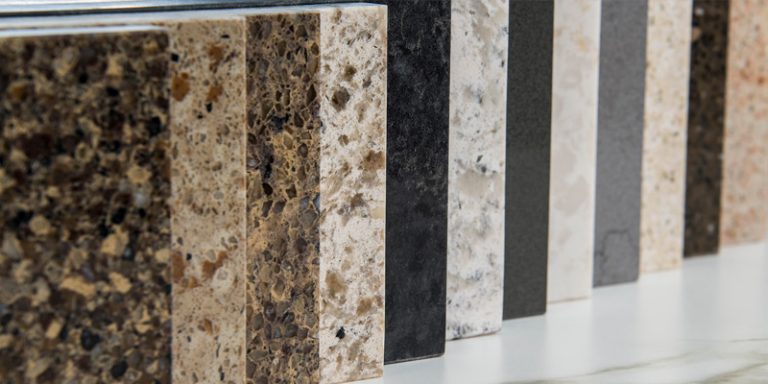
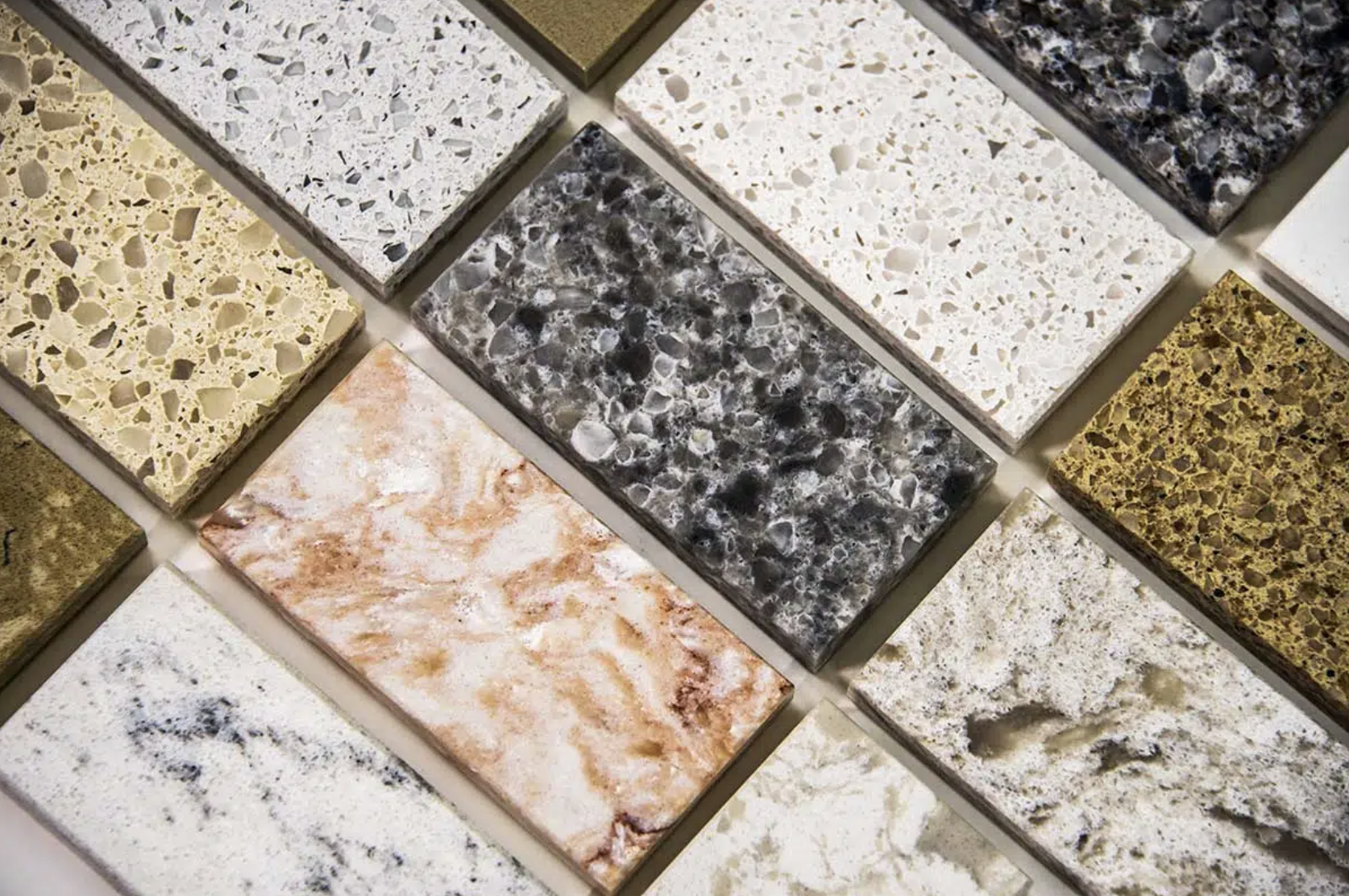
The diversity of engineered stone allows it to fit various architectural styles. While the base material remains similar, the aesthetic and textural “routes” differ based on the size of the quartz aggregates used and the pigments added during the mixing phase.
Material Comparison Table
| Category / Type | Description | Common Use Case | Effort / Cost Level |
| Fine-Grain Solid | Uniform color with very small, sand-like quartz particles. | Modern, minimalist kitchens and commercial labs. | Moderate |
| Coarse-Grain / Flecked | Visible chunks of quartz or recycled glass for a textured look. | Traditional residential kitchens and high-traffic areas. | Low to Moderate |
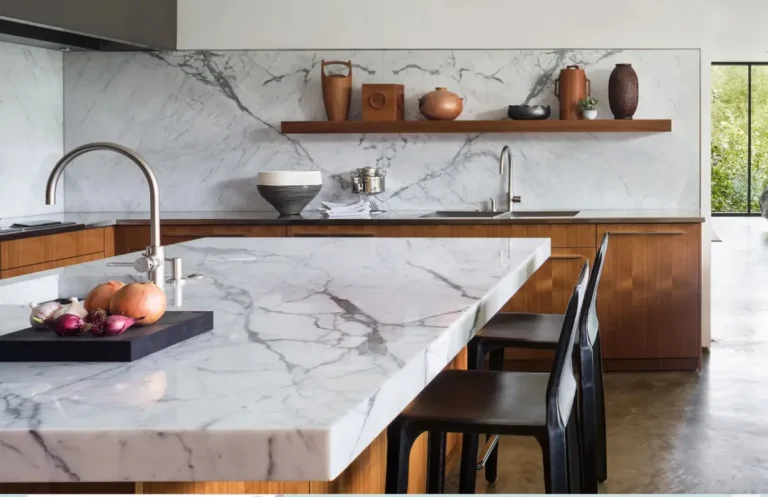
| Marble-Veined | Complex pigmenting designed to mimic natural Calacatta or Carrara. | Luxury bathrooms and high-end island focal points. | High |
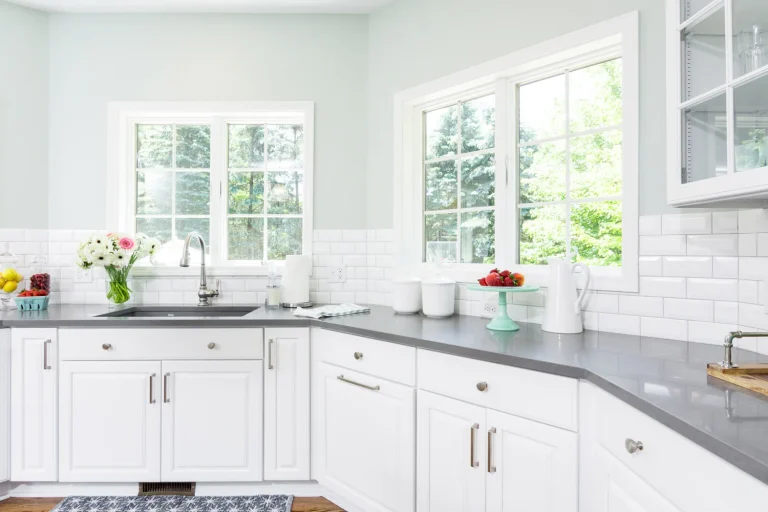
| Concrete-Style | Matte or “honed” finishes with grey, industrial tones. | Industrial lofts and contemporary workspaces. | Moderate |
| Sparkle / Mirrored | Includes small fragments of mirrored glass for light reflection. | Retail displays and vibrant residential interiors. | Low |
Choosing between these types depends largely on the visual environment and the desired level of maintenance. While all quartz is durable, honed or concrete-style finishes may require more frequent cleaning to prevent finger oils from showing, whereas flecked patterns are excellent at concealing small debris or water spots.
Practical Scenarios and Thematic Applications
Scenario 1: The High-Activity Residential Kitchen
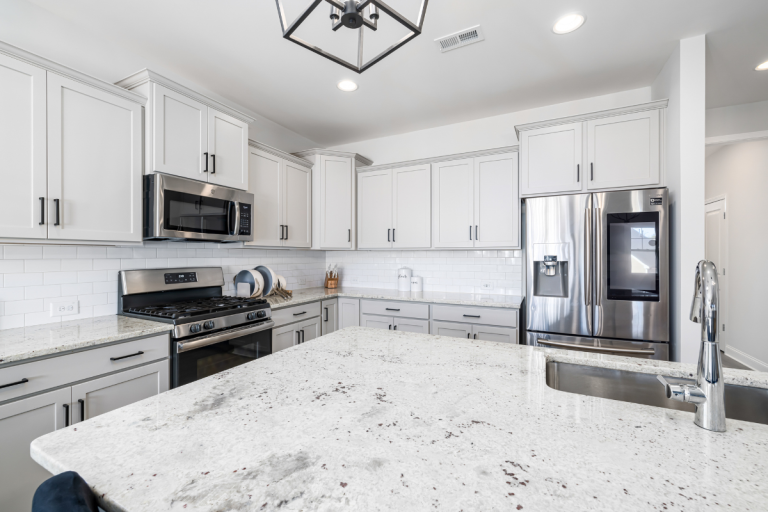
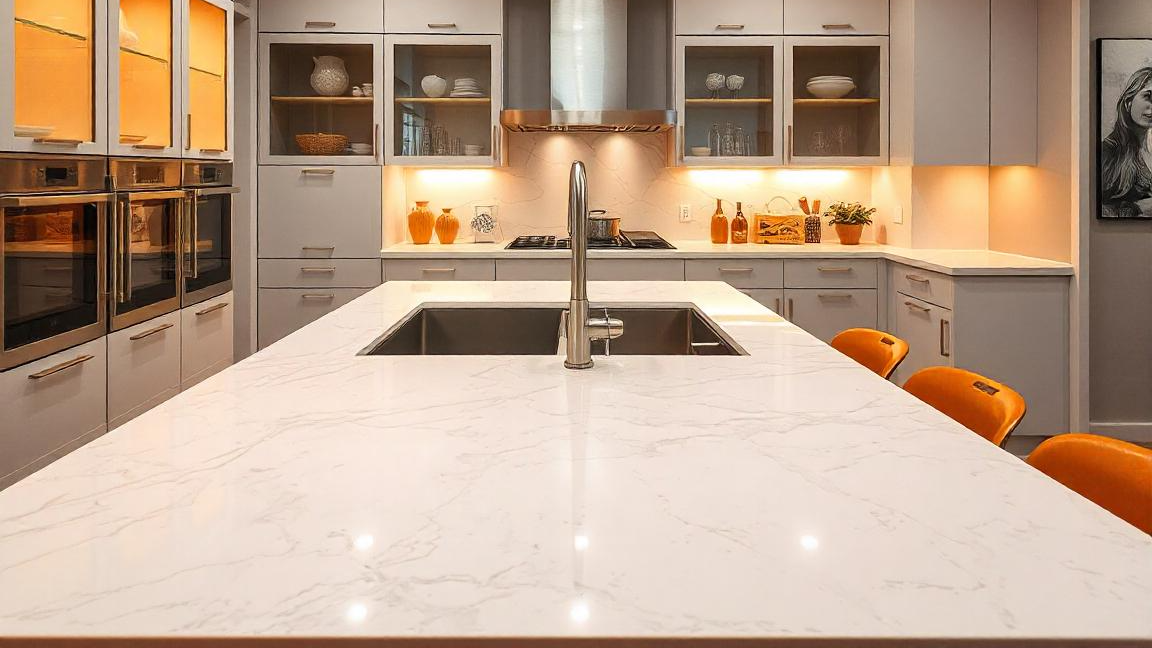
In a high-traffic family kitchen, the surface must withstand frequent food preparation, moisture, and varying temperatures. The focus here is on durability and ease of sanitation.
-
Components: 3cm thick slabs, eased edges for chip prevention, integrated undermount sinks.
-
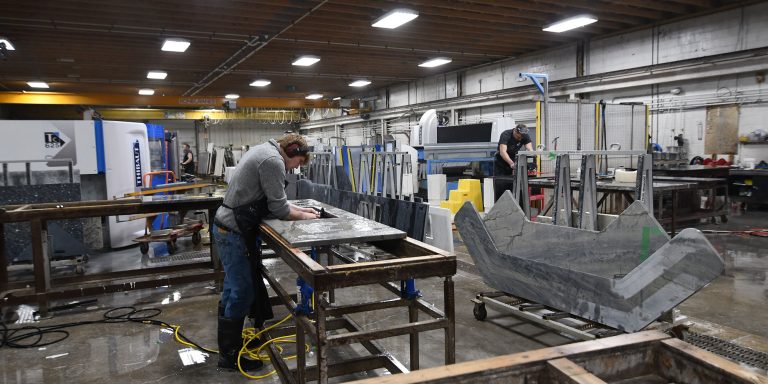
Process: Template creation, precise CNC cutting, and seam placement away from high-stress areas.
-
Relevance: This scenario is the most common application, testing the material’s resistance to everyday acidic liquids like lemon juice or vinegar.
Scenario 2: Professional Healthcare Environments
Medical offices and laboratories utilize engineered stone because its non-porous nature does not harbor bacteria or mold.
-
Components: Non-textured surfaces, coved backsplashes for easy cleaning, chemical-resistant resins.
-
Process: Sealing all joints with antimicrobial epoxy, ensuring zero-gap installations.
-
Relevance: This demonstrates the material’s hygienic advantages, where the primary goal is maintaining a sterile field.
Scenario 3: Multi-Unit Commercial Developments
For apartments or hotels, consistency across hundreds of units is the priority.
-
Components: 2cm slabs (for weight/cost reduction), standardized prefabricated sizes, neutral color palettes.
-
Process: Mass production of identical dimensions and bulk shipping.
-
Relevance: This scenario highlights the industrial reliability of quartz countertops over natural stone, where slab-to-slab variation would be a logistical disadvantage.
Comparison: Scenario 1 focuses on bespoke aesthetics and daily resilience; Scenario 2 prioritizes hygiene and chemical standards; Scenario 3 emphasizes logistical consistency and cost-efficiency. Readers should identify which environment best mirrors their specific project needs.
Planning, Cost, and Resource Considerations

Proper planning is the most effective way to prevent waste and budget overruns. Because quartz is heavy and requires specialized tools, professional measurement (templating) is a critical step that cannot be bypassed.
Sample Planning & Budget Table
| Category | Estimated Amount / Effort | Explanation | Optimization Tips |
| Material (Slabs) | $50 – $120 per sq. ft. | Cost varies by brand, pattern complexity, and thickness. | Select “standard” colors to avoid premium pricing. |
| Fabrication | $20 – $50 per linear ft. | Includes cutting, edge polishing, and sink cutouts. | Minimize the number of cutouts to reduce labor. |
| Installation | $300 – $800 total | Professional labor for delivery and secure placement. | Ensure clear access to the site to avoid “difficult carry” fees. |
| Support Structures | $100 – $300 | Brackets or plywood sub-tops for large overhangs. | Plan for supports during the cabinetry phase. |
Note: Figures are examples based on market averages and will vary by region and specific project complexity.
Strategies, Tools, and Support Options
The successful implementation of quartz countertops relies on specific fabrication strategies and professional-grade tools.
-
Laser Templating: Digital measuring tools that create a perfect CAD file of the installation area.
-
Advantages: High precision; accounts for wall irregularities.
-
Disadvantages: Requires expensive equipment and trained technicians.
-
-
Bridge Saws / Water Jets: Heavy machinery used to cut the slabs.
-
Advantages: Clean edges; prevents cracking through water cooling.
-
Disadvantages: High power and water consumption; fixed location.
-
-
Seam Setters: Suction-based tools that pull two slabs together during installation.
-
Advantages: Makes seams nearly invisible and perfectly level.
-
Disadvantages: Adds time to the installation process.
-
-
Full-Height Backsplashes: Using the same quartz material for the wall behind the counter.
-
Advantages: Seamless look; very easy to clean.
-
Disadvantages: Significantly increases material costs.
-
Safety, Risks, and Common Challenges
While the finished product is safe, there are specific risks associated with the material and its installation.
-
Thermal Shock: Quartz is heat-resistant but not heat-proof. Sudden exposure to high heat (e.g., a hot pan) can cause the resin to dislocate or the slab to crack. Prevention: Always use trivets or hot pads.
-
Chemical Damage: High-pH cleaners (like bleach or oven cleaner) can permanently dull the surface. Prevention: Use only pH-neutral soap and water.
-
Silica Dust: During fabrication, cutting quartz releases crystalline silica dust. Prevention: Fabricators must use wet-cutting methods and high-grade respiratory protection.
-
Edge Chipping: While hard, the edges (especially sharp corners) can chip if struck by heavy objects. Prevention: Choose rounded edge profiles like “bullnose” or “eased.”
Maintenance and Best Practices

Long-term management of quartz countertops is relatively simple, as they do not require the periodic sealing necessary for granite or marble.
-
Daily Cleaning: Wipe with a soft cloth and a mixture of warm water and mild dish soap.
-
Spill Management: Clean pigmented liquids (wine, coffee, ink) immediately to prevent potential surface staining.
-
Scraping: Use a plastic putty knife to gently remove dried food or paint; avoid metal scrapers.
-
Avoid Pressure: Do not stand or sit on the countertops, especially near seams or sink cutouts where the material is thinner.
Regular review of the seams and caulking where the countertop meets the wall ensures that moisture does not seep into the cabinetry below, preserving the integrity of the entire kitchen or bathroom structure.
Documentation and Reporting
In commercial or high-end residential projects, documenting the specific slab batch and fabrication details is standard practice. This information is vital if the surface needs to be matched during a future renovation.
Tips for Organizing Information:
-
Keep a record of the manufacturer name and color code (e.g., “Brand X, Color #4003”).
-
Store a copy of the final CAD template or physical drawing.
Illustrative Examples:
-
Batch Tracking: A developer records that “Slab Batch A-12” was used for the first floor, ensuring that any replacement slabs for those units come from the same production run to avoid color shifts.
-
Warranty Filing: A homeowner saves the digital receipt and care instructions provided by the fabricator to validate the limited lifetime warranty offered by the quartz manufacturer.
FAQ
Q: Does quartz require sealing?
A: No. Because it is non-porous and manufactured with resin, it is naturally sealed.
Q: Can I cut food directly on the surface?
A: While quartz is scratch-resistant, knives can dull quickly on the hard surface, and repeated cutting in one spot may leave faint marks. Using a cutting board is recommended.
Q: Is quartz better than granite?
A: Neither is objectively “better.” Quartz is more consistent and lower maintenance, while granite is more heat-resistant and offers unique, natural patterns.
Closing Summary
Quartz countertops are a highly durable, versatile, and aesthetically consistent choice for modern interiors. By combining natural minerals with advanced resins, these surfaces offer a non-porous solution that simplifies maintenance while providing the visual appeal of stone. Successful use of this material requires careful planning of seams, professional fabrication to mitigate silica risks, and a commitment to using trivets to protect the surface from thermal shock. For the majority of users, the long-term benefits of durability and ease of care make quartz a premier architectural surface.